Basque Separatists: History, ETA, Independence Movement, and the Fight for Basque Identity
Basque separatists have played an important role in the political and cultural history of Spain and southwestern France. Their movement is connected to a long-standing desire among some Basque people to protect their language, traditions, national identity, and political rights. While many people associate Basque separatism with the armed organisation Euskadi Ta Askatasuna (ETA), the wider movement is much more complex. It includes peaceful political parties, cultural organisations, independence supporters, and communities that want greater regional self-government.
basque serparatists people have a distinct cultural identity that developed over centuries. Their language, Euskara, is one of Europe’s most distinctive languages, and their historical traditions have helped shape a strong sense of belonging. These characteristics have influenced political movements that seek recognition of the Basque Country as a nation with the right to determine its own future.
The history of Basque separatism includes political campaigns, periods of repression, armed conflict, democratic reforms, and continuing debates about independence.
Who Are the Basque Separatists?
Basque separatists are individuals, political groups, and organisations that support independence or greater political self-determination for the Basque people. basque separatists main objective is to establish the Basque Country as an independent political entity, separate from Spain and, depending on their preferred definition of the Basque nation, potentially France as well. However, not everyone who identifies as a basque separatists nationalist supports complete independence. Some prefer greater regional autonomy, stronger cultural protections, or additional control over local political and economic decisions.
basque separatists Country, commonly known as Euskal Herria in the Basque language, is a historical and cultural region that extends across parts of northern Spain and southwestern France. It traditionally includes seven territories: Álava, Biscay, Gipuzkoa, Navarre, Labourd, Lower Navarre, and Soule. Three of these territories form the basque separatistsAutonomous Community in Spain, while Navarre has its own autonomous government and the three northern territories are part of France. This geographical division is important because different Basque nationalist groups have different ideas about which territories should belong to a future independent state.
The Historical Origins of Basque Nationalism
The roots of Basque nationalism can be traced to the region’s distinctive historical institutions, language, and cultural traditions. For centuries, many Basque communities maintained local privileges and forms of self-government known as fueros. These traditional rights allowed certain territories to manage important aspects of their internal affairs. However, political centralisation and conflicts during the nineteenth century gradually weakened these arrangements. The loss of traditional privileges created concerns about local independence and encouraged new political movements seeking to protect Basque interests.
Modern basque separatists nationalism developed during the late nineteenth century, particularly through the work of Sabino Arana, who founded the Basque Nationalist Party, known as EAJ-PNV or simply PNV, in 1895. Arana promoted the idea that basque separatists represented a distinct nation with their own language, culture, and political identity. His ideas helped establish an organised nationalist movement that initially focused on protecting traditional Basque identity and achieving political independence. Over time, basque separatists nationalism developed into several different political traditions, including moderate Christian democratic nationalism, socialist independence movements, and cultural organisations focused on preserving Euskara.
The Impact of the Spanish Civil War and Francisco Franco
The Spanish Civil War, which began in 1936, was a major turning point in Basque history. Many basque separatists supported the Republican side because it offered the possibility of regional autonomy and political recognition. In October 1936, the Republican government approved a Basque autonomy statute, allowing the creation of a regional government under the leadership of José Antonio Aguirre. However, this period of self-government was short-lived. Nationalist forces led by General Francisco Franco eventually captured the Basque territories, bringing an end to the region’s autonomous institutions during the war.
One of the most devastating events associated with this period was the bombing of Guernica on April 26, 1937. German aircraft supporting Franco’s Nationalist forces attacked the Basque town, destroying large parts of it and killing many civilians. The bombing became an international symbol of the suffering caused by war and was later immortalised in Pablo Picasso’s famous painting, Guernica. After Franco established his dictatorship, Basque political organisations faced severe restrictions. The Basque language was suppressed in public life, cultural expressions were controlled, and supporters of regional autonomy experienced imprisonment, exile, and persecution. These policies strengthened resistance among some Basques and helped create the conditions in which more radical nationalist organisations emerged.
ETA and the Rise of Armed Basque Separatism
basque separatistsm, Euskadi Ta Askatasuna, commonly known as ETA, was founded in 1959 during Franco’s dictatorship. Its translates into English as Basque Homeland and Freedom. The organisation emerged from young Basque nationalists who believed that traditional political methods were insufficient to challenge the dictatorship and secure independence. ETA initially focused on promoting Basque national identity, resisting political repression, and developing a revolutionary movement. Over time, however, it adopted armed struggle and became one of Europe’s most notorious basque separatists organisations.
ETA’s campaign of violence became particularly significant during the late 1960s and continued for several decades. The organisation carried out bombings, assassinations, kidnappings, and other attacks targeting members of the Spanish security forces, politicians, military personnel, and civilians. One of its most significant operations occurred in 1973, when it assassinated Luis Carrero Blanco, the Spanish prime minister and a close political ally of Franco. Although ETA presented its campaign as a struggle for Basque independence, its violence caused enormous suffering. More than 850 people were killed during its decades of activity, leaving lasting pain among victims, families, and communities throughout Spain.
Basque Separatists After the End of Franco’s Dictatorship
basque separatists, Francisco Franco died in November 1975, creating an opportunity for Spain to move towards democracy. This political transition brought important changes for the Basque Country. Political parties and cultural organisations that had previously faced restrictions gained opportunities to operate openly. Basque nationalists began participating in elections, while regional leaders pushed for recognition of historical rights and greater control over local institutions. However, the transition did not end disagreements about independence, national identity, or the political future of the Basque territories.
An important development came with the 1978 Spanish Constitution and the Statute of Autonomy of the Basque Country, approved by referendum on October 25, 1979. The statute established the Basque Autonomous Community, providing its own parliament, government, and significant responsibilities in areas such as education, healthcare, and public administration. The region also gained important financial powers through its historical economic agreement system, known as the Concierto Económico. While moderate nationalists welcomed these arrangements as an important achievement, more radical basque separatists considered autonomy insufficient. ETA continued its armed campaign despite the return of democracy, creating a serious political and security challenge for the Spanish government.
Political Parties and Organisations Supporting Basque Independence
basque separatists has never represented a single political organisation or ideology. The Basque Nationalist Party, or PNV, has historically been one of the most influential nationalist parties in the region. It generally supports stronger self-government and recognises the Basque people as a nation, while traditionally pursuing its objectives through democratic institutions. Although the PNV has supported greater national recognition and additional political powers, it has not followed the same revolutionary approach as ETA. Its influence has been especially important in shaping the institutions and political development of the modern Basque Autonomous Community.
Another important political force is EH Bildu, a left-wing Basque nationalist coalition that supports self-determination and eventual independence through democratic means. The coalition developed from earlier political organisations associated with the Basque pro-independence left and has become an important participant in regional and national politics. Its support includes people who favour a sovereign Basque state, stronger social policies, and greater protection for Basque culture and language. Other political organisations and civic movements also contribute to discussions about independence, autonomy, and national identity. These differences demonstrate why it is inaccurate to describe every Basque nationalist as an ETA supporter or to treat peaceful political activism as equivalent to armed separatism.
The Decline and Dissolution of ETA
By the late twentieth century, ETA faced increasing pressure from Spanish and French security forces, declining public support, internal disagreements, and changing political circumstances. Cooperation between Spain and France made it increasingly difficult for the organisation to maintain its leadership, weapons supplies, and operational networks. At the same time, public opposition to political violence grew across Basque society. Victims’ families, civic organisations, political leaders, and ordinary citizens increasingly demanded an end to killings and intimidation. These developments weakened ETA’s position and reduced its ability to present armed struggle as a legitimate path towards independence.
In January 2011, ETA announced a permanent cessation of its armed activity, marking a major turning point in the Basque conflict. The organisation subsequently completed its disarmament process in April 2017. On May 3, 2018, it formally announced its dissolution, bringing an end to nearly six decades of organised armed activity. This decision did not achieve ETA’s original goal of establishing an independent Basque state, but it opened a new chapter in regional politics. Discussions about political prisoners, victims’ rights, historical memory, and reconciliation have continued since its dissolution. For many families affected by ETA’s violence, the organisation’s end represented an important step, although the consequences of the conflict remain deeply felt.
Basque Language, Culture, and National Identity
The Basque language, known as Euskara, is one of the most important elements of Basque national identity. Unlike Spanish and French, which belong to the Indo-European language family, Euskara is a language isolate, meaning that its origins cannot be conclusively linked to another living language family. It has survived centuries of political and cultural changes and remains an important symbol of the region’s distinctive heritage. During Franco’s dictatorship, the use of Basque was restricted in public institutions and education. Following the restoration of democracy, language protection became an important part of regional policy, helping Euskara regain a stronger position in schools, broadcasting, public administration, and everyday cultural life.
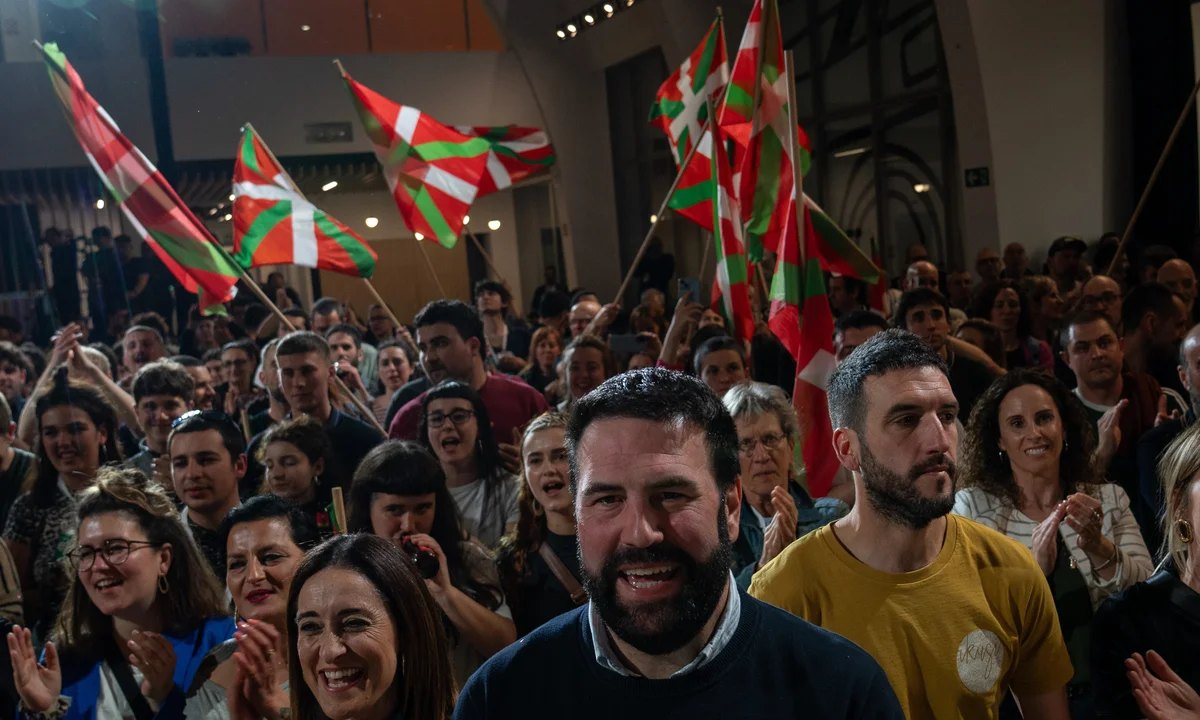
Basque culture also includes traditional music, dance, festivals, sports, food, and community traditions. Activities such as pelota, rural strength competitions, and traditional Basque dancing remain important expressions of local identity. The ikurriña, the Basque flag, is another widely recognised symbol of the region and its national movement. Cultural organisations, schools, writers, musicians, and community groups have helped preserve these traditions across generations. For many Basques, protecting their language and cultural heritage is just as important as achieving political independence. This explains why Basque nationalism continues to exist through peaceful cultural and political activities, even though ETA has disappeared as an armed organisation.
The Current Situation of Basque Separatists and Independence Politics
Today, the basque separatists independence movement operates primarily through democratic politics, regional institutions, public debate, and cultural organisations. The Basque Autonomous Community has considerable control over important aspects of public administration, including education, healthcare, and taxation. These powers make it one of Spain’s most politically distinctive regions. However, some nationalists believe that the current arrangements do not provide sufficient recognition of Basque sovereignty. They continue to argue that the Basque people should have the right to decide independently whether to remain within Spain or establish their own state.
basque separatists, Recent electoral developments demonstrate that independence remains a significant political issue. In the April 2024 Basque parliamentary election, the PNV and EH Bildu each secured 27 seats, showing the strength of competing nationalist political traditions. The PNV subsequently formed a coalition government with the Basque Socialist Party, known as PSE-EE, under regional president Imanol Pradales. EH Bildu also maintained a strong position as a major opposition force. These results showed that Basque nationalism remains influential, but they did not establish a unified public demand for immediate independence. Many residents support autonomy within Spain, while others favour a future referendum or a completely independent Basque state. The region’s political future therefore continues to depend on democratic debate, public opinion, and negotiations between political institutions.
The Future of the Basque Separatist Movement and Conclusion
The future of basque separatists will likely depend on how political parties, regional institutions, and Spanish authorities address questions of sovereignty and self-government. Although ETA’s armed campaign has ended, the political ideas that influenced Basque nationalism have not disappeared. Modern independence supporters increasingly focus on democratic participation, constitutional reform, economic decision-making, and the protection of cultural identity. Younger generations also have an important role in shaping the movement because their views on language, regional identity, European politics, and independence may differ from those of earlier generations. As political circumstances change, the movement may continue to develop new approaches to achieving greater recognition for the Basque people.
basque separatists, Relations between the Basque Autonomous Community, Navarre, France, and the Spanish government will also influence future discussions. Some nationalists support closer cooperation among all seven traditional Basque territories, while others concentrate on strengthening the existing autonomous institutions. Economic stability, employment, education, public services, and cultural preservation are likely to remain important political concerns. Any major constitutional change would require substantial political agreement and democratic support. The history of the Basque separatist movement shows that national identity can remain powerful even when political methods change. Its future will therefore be shaped less by armed conflict and more by elections, public debate, cultural preservation, and peaceful political negotiations.
Conclusion
Basque separatists is a movement deeply connected to the history, culture, language, and political identity of the Basque people. Over the years, it has developed from early nationalist ideas into a complex political movement involving different parties, cultural organisations, and independence supporters. The period of Francisco Franco’s dictatorship played a major role in strengthening demands for Basque recognition and self-government, while ETA’s armed campaign left a painful legacy of violence and loss. Its dissolution in 2018 marked an important turning point in the region’s history.
Today, Basque independence is mainly discussed through democratic politics, elections, cultural preservation, and demands for greater self-determination. Although the Basque Country has considerable autonomy within Spain, the debate over complete independence remains active.