



Introduction
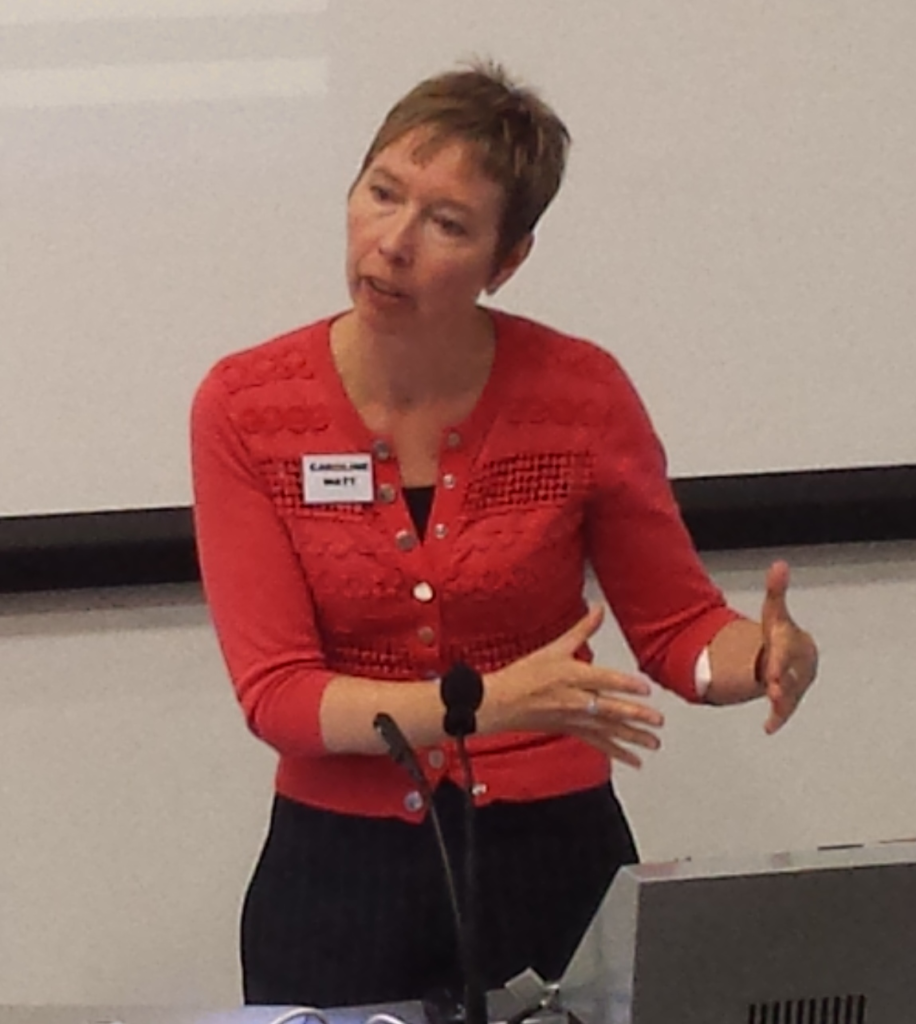
Caroline Watt is a well-known psychologist, researcher, educator, and author recognized for her significant contributions to the field of parapsychology. Over the course of her career, she has dedicated herself to exploring paranormal phenomena through scientific methods, helping to bring credibility and academic rigor to a field that often attracts controversy. Her work has focused on understanding unusual human experiences, investigating psychic claims, and promoting evidence-based research practices.
As one of the leading figures in modern parapsychology, Caroline Watt has built a reputation for balancing open-minded inquiry with scientific skepticism. Her efforts have not only advanced research in paranormal studies but have also encouraged critical thinking and methodological transparency within the broader scientific community.
Who Is Caroline Watt?
Caroline Watt is a Scottish psychologist who has spent much of her professional life studying paranormal experiences and claims. She is widely recognized for her involvement in academic parapsychology and for her commitment to applying scientific standards to the investigation of extraordinary phenomena.
Unlike many researchers who either strongly support or completely reject paranormal claims, Watt has consistently taken a balanced approach. She believes that unusual experiences deserve careful examination and that conclusions should be based on evidence rather than assumptions. This perspective has made her a respected voice among researchers, students, and members of the public interested in the psychology of paranormal beliefs.
Her career reflects a dedication to understanding the relationship between human perception, belief systems, and reports of extraordinary experiences.
Early Life and Educational Background
Interest in Human Behavior
From an early age, Caroline Watt showed an interest in understanding how people think, feel, and interpret the world around them. This curiosity naturally led her toward the study of psychology.
She became fascinated by involving perception, consciousness, intuition, and unusual human experiences. These interests would later shape the direction of her academic and professional career.
Academic Journey
Caroline Watt pursued higher education in psychology, where she gained a strong foundation in scientific research methods, experimental design, and statistical analysis. Her academic training emphasized critical thinking and evidence-based inquiry, skills that would become essential in her later work.
As her studies progressed, she developed a growing interest in parapsychology, a field that examines experiences and phenomena that appear to go beyond conventional scientific explanations. This interest inspired her to pursue advanced research and contribute to the scientific investigation of paranormal claims.
Career Development in Parapsychology
Entering the Field
Parapsychology is a specialized branch of research that investigates topics such as telepathy, clairvoyance, precognition, psychic experiences, and other reported paranormal phenomena. Because the field remains controversial, researchers often face challenges in gaining acceptance within mainstream science.
Caroline Watt entered this area with a commitment to applying rigorous scientific methods. She believed that extraordinary claims should be examined carefully and objectively, regardless of whether they ultimately prove true or false.
Her willingness to investigate controversial topics while maintaining high research standards quickly distinguished her from many others working in the field.
Building a Research Career
Over time, Watt became known for conducting controlled experiments designed to test paranormal claims. She participated in numerous research projects and collaborated with scholars interested in psychology, consciousness, and anomalous experiences.
Her work helped establish her as one of the most respected researchers in modern parapsychology.
Leadership in Academic Research
A Prominent Academic Role
Throughout her career, Caroline Watt held leadership positions that allowed her to shape the direction of parapsychological research. She became responsible for guiding research programs, mentoring students, and promoting scientific standards within the field.
Her leadership extended beyond conducting experiments. She also worked to create opportunities for collaboration, education, and public engagement.
Mentoring Future Researchers
One of Watt’s most valuable contributions has been her role as an educator and mentor. She has supervised students interested in psychology and parapsychology, helping them develop research skills and critical thinking abilities.
Many of the individuals she has taught have gone on to pursue careers in academia, research, and related fields.
Research Interests
Extrasensory Perception (ESP)
One of Caroline Watt’s primary research interests has been extrasensory perception, commonly referred to as ESP.
ESP is a term used to describe the alleged ability to obtain information without relying on the traditional senses. Common categories of ESP include:
- Telepathy
- Clairvoyance
- Precognition
- Psychic intuition
Watt has investigated these claims through carefully designed experiments intended to determine whether such abilities can be demonstrated under controlled conditions.
Scientific Investigation
Rather than accepting reports of ESP at face value, Watt has focused on evaluating them using scientific methods. Her studies examine whether reported successes exceed what would be expected by chance alone.
This evidence-based approach has helped bring greater credibility to research in the area.
Dream Studies
Exploring Precognitive Dreams
Dreams have long fascinated researchers interested in human consciousness and paranormal experiences. Caroline Watt has investigated claims that dreams can provide information about future events.
Research in this area seeks to determine whether individuals can accurately predict future occurrences through dream experiences.
Understanding Human Perception
Watt’s work on dreams has contributed to broader discussions about memory, perception, expectation, and the ways people interpret unusual experiences.
Her research encourages careful examination of both psychological and paranormal explanations.
Remote Viewing
What Is Remote Viewing?
Remote viewing refers to attempts to describe distant or hidden targets through alleged psychic means. Participants claim to access information beyond the reach of ordinary sensory perception.
Caroline Watt has examined such claims through controlled studies designed to eliminate alternative explanations.
Evaluating Results
Her research focuses on determining whether observed results can be attributed to chance, experimental error, psychological influences, or genuine anomalous processes.
This objective approach reflects her commitment to scientific inquiry.
Distant Influence and Healing
Another area of interest in Watt’s work involves claims that thoughts or intentions can influence another person from a distance.
Researchers in this field investigate whether mental focus, prayer, or healing intentions can produce measurable effects on others without direct contact.
Caroline Watt has explored these topics using scientific methodologies aimed at identifying reliable evidence while minimizing bias.
Contributions to Scientific Methodology
Raising Research Standards
One of Caroline Watt’s most important contributions to parapsychology has been her focus on improving research quality.
She has consistently encouraged researchers to adopt rigorous practices such as:
- Careful experimental design
- Statistical accuracy
- Independent replication
- Transparent reporting
- Peer review
These standards help ensure that research findings are trustworthy and scientifically meaningful.
Addressing Replication Challenges
Replication is a cornerstone of scientific research. A finding is considered more reliable when it can be repeated successfully by independent researchers.
Watt has emphasized the importance of replication within parapsychology, recognizing that extraordinary claims require particularly strong evidence.
Her advocacy for replication has contributed to higher standards throughout the field.
Promoting Transparency
Transparency plays a vital role in maintaining scientific integrity.
Caroline Watt has supported practices that encourage openness in research, including:
- Publishing all results
- Sharing methodologies
- Reporting negative findings
- Reducing publication bias
These efforts help create a more accurate and reliable scientific record.
Publications and Writing
Educational Contributions
Caroline Watt has written extensively about psychology, parapsychology, and research methodology. Her publications are known for presenting information in a clear, balanced, and accessible manner.
She often explains both supportive and skeptical viewpoints, allowing readers to evaluate evidence independently.
Academic Research
Throughout her career, Watt has contributed numerous research papers covering topics such as:
- Extrasensory perception
- Dream research
- Remote viewing
- Paranormal beliefs
- Luck and superstition
- Research methods
- Psychological explanations for unusual experiences
These publications have influenced discussions within both parapsychology and psychology.
Teaching and Education
University Teaching
As a professor and educator, Caroline Watt has taught students about psychology, research methods, and paranormal studies.
Her courses emphasize:
- Critical thinking
- Scientific reasoning
- Evidence evaluation
- Experimental design
Students are encouraged to assumptions and examine claims objectively.
Expanding Access to Knowledge
Beyond traditional classroom teaching, Watt has helped make educational resources available to broader audiences.
Through lectures, workshops, online learning opportunities, and public presentations, she has shared knowledge with individuals around the world.
Public Engagement
Communicating Science
Caroline Watt has played an important role in communicating complex scientific concepts to the public.
She has participated in interviews, lectures, conferences, and educational events aimed at increasing public understanding of psychology and paranormal research.
Encouraging Critical Thinking
A central theme throughout her public engagement efforts is the importance of critical thinking.
She encourages people to ask such as:
- What counts as evidence?
- How can claims be tested?
- Are there alternative explanations?
- What role do biases play in interpretation?
These are valuable not only in parapsychology but in everyday decision-making as well.
Influence on Modern Parapsychology
Bridging Different Perspectives
One of Caroline Watt’s most notable achievements is her ability to bridge the gap between believers and skeptics.
She has demonstrated that controversial subjects can be investigated scientifically without assuming a particular outcome.
This balanced approach has encouraged constructive dialogue and greater respect between different viewpoints.
Strengthening Academic Credibility
Through her commitment to scientific standards, Watt has helped improve the credibility of parapsychology as an academic discipline.
Her work has shown that rigorous research methods can be applied even to topics that challenge conventional understanding.
Challenges and Controversies
Working in a Controversial Field
Parapsychology remains one of the most debated areas of scientific inquiry. Critics often the reliability of evidence supporting paranormal claims, while supporters argue that further investigation is warranted.
Caroline Watt has acknowledged these challenges throughout her career.
Rather than avoiding criticism, she has encouraged open discussion and careful examination of research findings.
Commitment to Evidence
Her response to controversy has consistently been to prioritize evidence over belief. This commitment has helped her maintain credibility and respect within academic circles.
Personal Philosophy
Open-Minded Skepticism
A defining characteristic of Caroline Watt’s work is her philosophy of open-minded skepticism.
This approach involves:
- Remaining open to new possibilities
- Demanding strong evidence
- Avoiding premature conclusions
- Applying scientific methods consistently
By balancing curiosity with critical analysis, Watt has created a model for responsible research.
Integrity and Professionalism
Throughout her career, she has demonstrated a commitment to honesty, transparency, and intellectual integrity.
These qualities have contributed significantly to her reputation as a respected researcher and educator.
Legacy and Lasting Impact
Advancing the Field
Caroline Watt’s contributions extend beyond individual experiments and publications. She has helped shape the direction of modern parapsychology by promoting higher research standards and encouraging methodological rigor.
Her work has influenced researchers, educators, and students across the world.
Inspiring Future Generations
Through teaching, mentorship, and public outreach, Watt has inspired countless individuals to explore about consciousness, perception, and human experience.
Her emphasis on evidence-based inquiry continues to influence new generations of researchers.\
Conclusion
Caroline Watt is one of the most influential figures in contemporary parapsychology. Her career has been defined by a dedication to scientific investigation, critical thinking, and intellectual honesty. Through her research, teaching, writing, and leadership, she has helped bring greater rigor and credibility to the study of paranormal phenomena.
By combining open-minded curiosity with scientific skepticism, Caroline Watt has demonstrated that even the most controversial subjects can be explored responsibly. Her contributions continue to shape discussions about human consciousness, extraordinary experiences, and the role of evidence in understanding the unknown.
As interest in psychology, perception, and paranormal phenomena continues to grow, Caroline Watt’s work remains an important example of how science can be used to investigate complex and fascinating about the human experience.
