


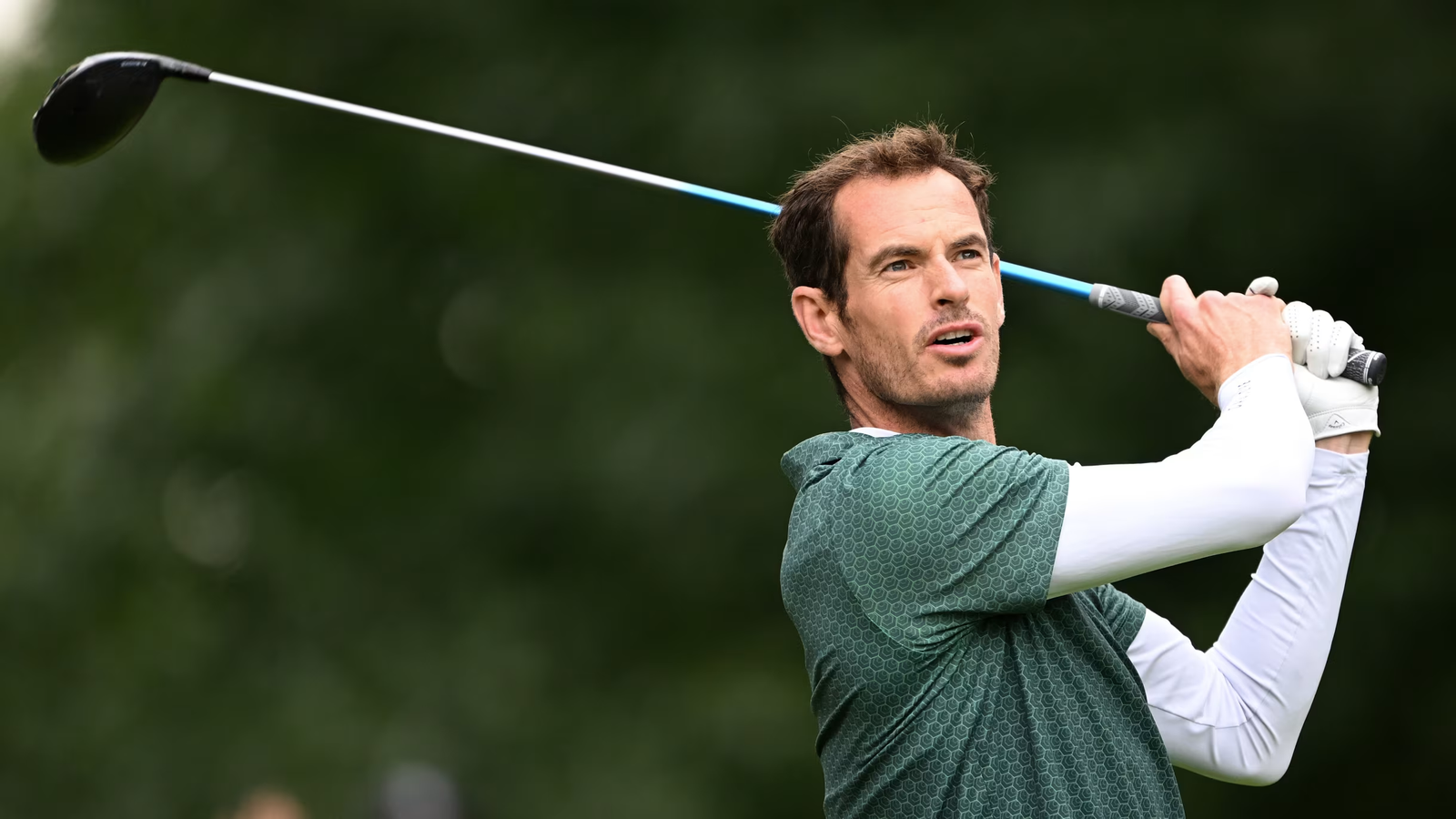
Andy Murray is one of the greatest British tennis players of the modern era and one of the most successful players of his generation. Born in Glasgow and raised in Dunblane, Scotland, Murray reached the top of professional tennis during an exceptionally competitive period dominated by Novak Djokovic, Roger Federer and Rafael Nadal. His career included three Grand Slam singles titles, two Olympic gold medals, the ATP world No. 1 ranking and 46 tour-level titles. He also became the first British man in the Open Era to win Wimbledon.
andy murray officially ended his professional playing career after the Paris Olympics, but his connection with tennis has continued. Since retirement, he has explored coaching and mentoring, first working with former rival Novak Djokovic and later joining Jack Draper’s team for the grass-court season. His journey from a talented Scottish youngster to a world No. 1 tennis champion and then an influential mentor makes Andy Murray’s career one of perseverance, intelligence and determination.
Andy Murray’s Early Life and Tennis Journey
Andy Murray was born on 15 May 1987 in Glasgow and grew up in Dunblane. He started playing tennis at a very young age, with his mother Judy Murray playing an important role in his development. His older brother Jamie Murray also became a professional tennis player and achieved major success in doubles. Andy’s early years were shaped by competitive sport, hard training and an ambition to become one of the world’s best tennis players.
At 15, Murray moved to Barcelona to train at the Sánchez-Casal Academy, an important step in his development as a professional player. Training in Spain exposed him to a highly competitive tennis environment and helped him develop the technical and physical qualities needed for the ATP Tour. His progress through junior tennis was followed by a rapid rise in professional competition, and he eventually established himself among the world’s leading young players.
Andy Murray’s Rise to the Top of Tennis
Murray first broke into the ATP top four in 2008 and spent much of his career competing directly against the strongest players in men’s tennis. His route to major success was particularly difficult because Djokovic, Federer and Nadal were winning a large share of the biggest tournaments. Even so, Murray consistently reached Grand Slam finals, ATP Masters 1000 finals and other major events, proving that he belonged among the elite.
His greatest ranking achievement came in 2016. After winning Wimbledon, reaching another Olympic final and producing an extraordinary second half of the season, Murray finished the year by defeating Djokovic in the ATP Finals championship match. That victory secured the year-end world No. 1 ranking. Murray became the only British player to reach No. 1 in men’s singles and spent 41 consecutive weeks at the top of the ATP rankings.
Andy Murray’s Grand Slam Titles
Murray’s first Grand Slam championship arrived at the 2012 US Open. He defeated Novak Djokovic in a five-set final to win his first major singles title. The victory was a major breakthrough after several Grand Slam final defeats and confirmed that he could overcome the strongest players on the biggest stages. It also made him the first British man since Fred Perry in 1936 to win a Grand Slam singles championship.
Wimbledon became the defining Grand Slam tournament of Murray’s career. In 2013, he defeated Djokovic in the final to become the first British man since Perry to win the Wimbledon men’s singles title. He won the championship again in 2016, defeating Milos Raonic in the final. Murray finished his career with three Grand Slam singles titles: the 2012 US Open and Wimbledon championships in 2013 and 2016.
Andy Murray and His Olympic Gold Medals
The Olympic Games hold a special place in Murray’s career. At London 2012, he won the men’s singles gold medal at Wimbledon by defeating Roger Federer in straight sets. The victory came only weeks after Federer had beaten Murray in the Wimbledon final, making the Olympic result particularly memorable for British tennis fans. Murray also won a silver medal in mixed doubles at the London Games alongside Laura Robson.
Murray created Olympic history at Rio 2016 by successfully defending his singles title. He defeated Juan Martín del Potro in a demanding final to become the first tennis player to win two Olympic singles gold medals. His final Olympic appearance came at Paris, where he competed in men’s doubles with Daniel Evans after withdrawing from the singles event because of injury. Their quarter-final defeat marked the end of Murray’s professional playing career.
Andy Murray’s Playing Style and Strengths
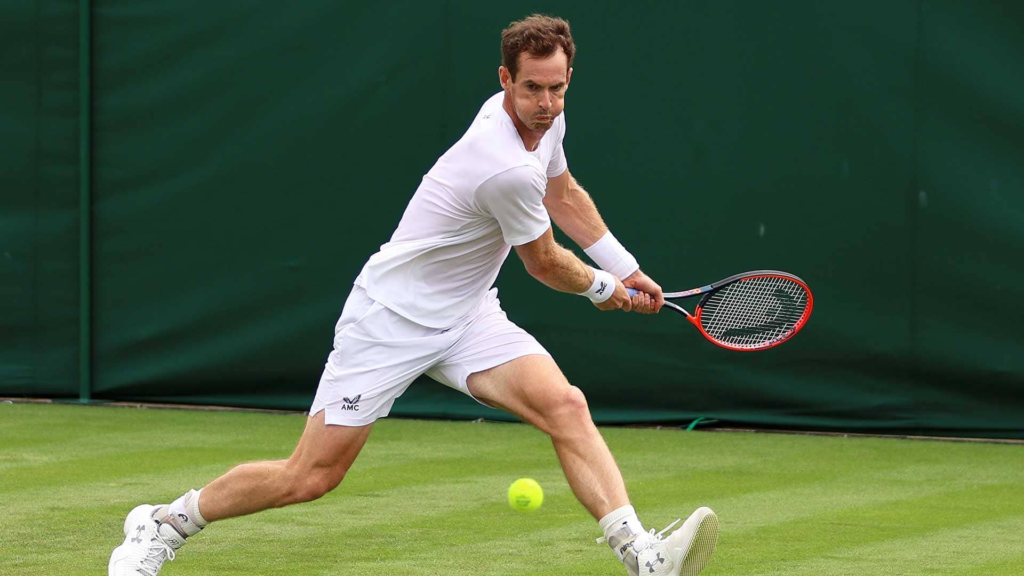
Murray became famous for his intelligent and adaptable style of tennis. His return of serve was one of the strongest parts of his game, while his two-handed backhand allowed him to redirect pace and attack from difficult positions. He was also an outstanding defensive player with excellent anticipation, court coverage and the ability to turn defence into offence. Instead of relying only on power, Murray often won points through strategy, variation and patience.
His mental strength was another major part of his success. Murray regularly competed in long matches against physically and tactically demanding opponents and was capable of changing his approach when a match was not going his way. His career record reflects his consistency: he finished with 739 singles wins, 262 defeats and 46 tour-level titles. He also recorded 29 victories against Djokovic, Federer and Nadal, demonstrating that he could beat each member of tennis’s dominant Big Three.
Andy Murray’s Injuries and Remarkable Comebacks
Injuries became an increasingly important part of Murray’s later career. He experienced serious problems with his right hip and underwent surgery in January 2018 and again in January 2019. These physical problems threatened his ability to continue playing professional tennis, particularly because Murray’s game depended heavily on movement, defence and endurance. For a period, retirement appeared to be a realistic possibility.
Instead, Murray repeatedly fought his way back onto the ATP Tour. His return after hip resurfacing surgery became one of the most remarkable comeback stories in modern tennis. Although he could no longer maintain the physical level that had taken him to world No. 1, he continued competing and eventually won ATP titles after his major surgery. His determination to keep playing despite significant physical limitations became an important part of his sporting identity.
Andy Murray’s Retirement From Professional Tennis
Murray announced that he planned to retire after years of managing injuries and declining physical condition. Before Wimbledon that year, he underwent a back procedure and was unable to compete in the singles event. He later confirmed that the Paris Olympics would be his final tournament, making the Games an emotional conclusion to a career that had included some of the biggest moments in British tennis history.
At Paris , Murray withdrew from the singles draw but continued in men’s doubles with Daniel Evans. The pair reached the quarter-finals before losing to Taylor Fritz and Tommy Paul. Murray finished his career at the age of 37 with three Grand Slam titles, two Olympic singles gold medals, the 2015 Davis Cup with Great Britain, 46 tour-level titles and 41 weeks as world No. 1.
Andy Murray as a Coach and Mentor
One of the most unexpected developments after Murray’s retirement was his coaching partnership with Novak Djokovic. The two had spent years as fierce competitors and faced each other 36 times at tour level. In late, Djokovic brought Murray into his coaching team, creating a remarkable transition from Grand Slam rivals to player and coach. Murray worked with Djokovic through Australian Open, where Djokovic reached the semi-finals before retiring against Alexander Zverev.
The partnership ended by mutual agreement after approximately six months. Murray said that he enjoyed analysing matches, preparing strategies and viewing elite tennis from the coaching box, although he also found coaching demanding. The experience gave him a new perspective on the sport and demonstrated that his tactical knowledge could be valuable even after his playing career had ended.
Andy Murray’s Role in Tennis
Murray returned to coaching by joining Jack Draper’s team for the grass-court season. Draper, one of Britain’s leading young players, had admired Murray while growing up and later became both a friend and opponent during Murray’s final years on the ATP Tour. Murray began working with Draper during the grass-court season, providing experience and tactical guidance during an important period of the British tennis calendar.
Draper made his return from injury at Eastbourne while Murray watched from his player box. Draper reached the semi-finals that week, although injury later affected his Wimbledon plans. Murray also returned to Wimbledon as a former champion , this time watching from the stands rather than competing. His involvement with Draper shows that his post-retirement career is increasingly focused on sharing the experience gained from nearly two decades at the highest level.
Conclusion ;Andy Murray’s Legacy in British Tennis
Andy Murray influence goes beyond the number of trophies on his record. He helped transform expectations around British men’s tennis by winning Wimbledon, becoming world No. 1 and leading Great Britain to its first Davis Cup title in 79 years in 2015. His achievements came during an unusually strong era, when three of the sport’s greatest-ever players were regularly competing for the same Grand Slam titles.
Murray’s greatest legacy may ultimately be his resilience. He repeatedly faced major defeats, career-threatening injuries and intense pressure before finding ways to continue. His intelligence, honesty, work ethic and commitment to competition made him an important figure in modern tennis. Although his professional playing career ended, his coaching work and continued presence around the sport mean Andy Murray remains an influential in tennis. His story is not simply about winning championships; it is about reaching the highest level and refusing to stop fighting when circumstances became difficult.
