


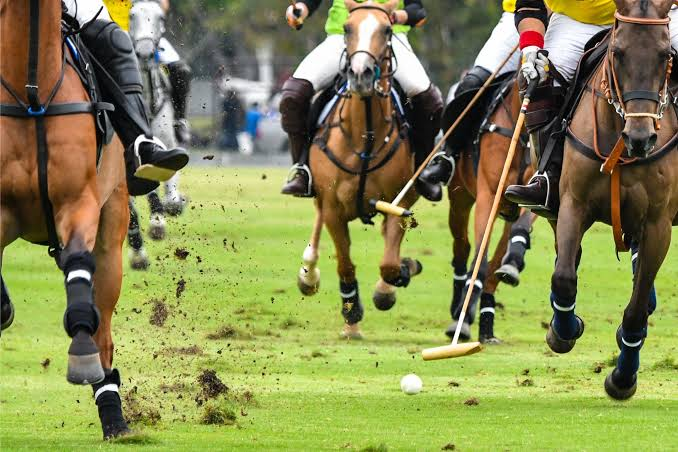
Horse polo is one of the world’s oldest team sports and one of the most recognizable equestrian games. Played on horseback with a long-handled mallet and a small ball, polo combines riding ability, hand-eye coordination, speed, positioning, and teamwork. A traditional outdoor match features two teams of four players trying to hit the ball through the opposing team’s goalposts. The game is divided into short periods called chukkas, creating a fast-moving contest in which players and horses must react almost continuously.
Modern horse polo is played in many countries and has developed into several forms, including outdoor field polo and arena polo. The sport has a long international history, with organized modern competition developing particularly strongly through Britain, Argentina, the United States, India, Australia, Pakistan, and other polo-playing nations.
What Is Horse Polo?
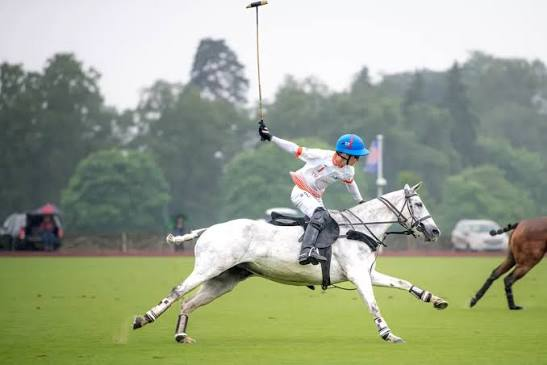
Horse polo is a team sport in which mounted players use flexible-handled mallets to strike a ball across a playing field. The basic objective is simple: score more goals than the opposing team by hitting the ball between the opponent’s goalposts. What makes the sport unusual is that almost every important action happens while the player is riding at speed. A polo player must control the horse, watch the ball, understand the movement of teammates and opponents, and make accurate shots at the same time.
Traditional outdoor polo is played by four players on each team. Each player generally has a numbered position from one through four, although players can move throughout the field as the situation changes. The number one normally has a strong attacking role, number two combines attacking and defensive responsibilities, number three often acts as the team’s main strategist, and number four generally provides defensive cover. These roles are not rigid positions like fixed places on a football field, but they help explain how a team organizes its play.
The History and Origins of Horse Polo
horse polo has a history stretching back more than two thousand years. Its early development is generally associated with mounted cultures in Asia, particularly areas where horses were important for warfare and transportation. Over centuries, games involving horses and sticks developed in different forms. The sport later became especially influential in India, where British military personnel encountered polo and helped introduce organized versions of the game to Britain and other parts of the world.
The spread of horse polo during the nineteenth century helped create many of the rules and institutions associated with modern horse polo. British cavalry officers played an important role in bringing the sport from India to Britain, where clubs and organized competitions developed. From there, polo spread internationally, including to Argentina, which eventually became one of the most important centers of high-level polo. Today, polo has an international structure with national associations and competitions supporting the sport across different regions.
How a Polo Match Works
A traditional horse polo match is divided into periods called chukkas. The exact structure can vary according to the competition and governing rules, but outdoor matches commonly consist of several chukkas played one after another. Each chukka is relatively short compared with many other team sports, which keeps the pace high and gives players and horses regular opportunities to rest and change mounts.
The short periods are important because polo is an extremely demanding sport for both horses and riders. Players normally use several horses during a match rather than expecting one horse to play continuously. At the end of a chukka, players change horses and prepare for the next period. Goals generally count as one point, and the team with the greater number of goals wins the match. The precise format can differ between competitions and forms of polo.
Polo Field Size and Playing Area
A full-size outdoor horse polo field is enormous compared with many other team sports. A standard field can measure up to 300 yards long and 200 yards wide when unboarded. When boards are used along the sides, the width is reduced. The large playing area gives horses enough space to gallop at speed while allowing players to develop long passing movements and attacking plays.
The playing area contains goalposts at opposite ends, and the ball moves across a large grass surface during the match. The size of the field is one reason polo requires such a strong combination of riding skill and anticipation. A player can strike the ball a considerable distance, meaning teammates need to read the direction of play and move into useful positions before the ball arrives. Field preparation is also important because horses need secure footing while accelerating, turning, stopping, and changing direction.
Polo Ponies and the Importance of the Horse
The horses used in polo are commonly called polo ponies, although they are not necessarily ponies in the everyday sense. Many are athletic horses selected and trained for speed, agility, responsiveness, balance, and a calm reaction to the fast movement of the game. A successful polo horse needs to accelerate quickly, stop safely, turn sharply, and respond to subtle instructions from the rider while remaining focused on the ball and surrounding horses.
Horse management is a major part of the sport because the welfare and performance of the horses directly affect the quality of play. Players generally change mounts between chukkas to reduce fatigue, and competitions have rules governing horse changes and conditions of play. Responsible training, conditioning, rest, feeding, veterinary care, transportation, and careful match management are essential parts of professional polo. The speed of the game makes good horse care particularly important.
Polo Players, Positions, and Team Strategy
Outdoor horse polo teams have four players, and each player normally has a traditional role. Number one is generally positioned toward the attacking end and is expected to create and finish scoring opportunities. Number two often supports the attack while also helping defensively. Number three is commonly considered the central tactical player and may coordinate the team’s movement. Number four, often called the back, normally provides the deepest defensive position and tries to stop opposing attacks.
Although these traditional roles are useful for understanding the game, actual polo is much more fluid. Players move according to the ball, opponents, and tactical situation. A rider may need to attack one moment and defend the next. Communication and awareness are therefore essential. A strong team must understand how to create space, maintain possession, support the player carrying the ball, and avoid fouls. The sport’s rules are designed to manage dangerous situations involving horses and riders, making positioning important for both strategy and safety.
Polo Rules, Fouls, and the Right of Way
One of the most important concepts in horse polo is the line of the ball and the right of way. Because several horses may be moving quickly toward the same ball, players cannot simply ride across one another’s paths. The rules establish principles that help determine which player has the right to continue along the ball’s line and which player must give way. Umpires monitor these situations and can stop play when a rider creates a dangerous crossing or commits another foul.
The mallet also has specific restrictions. Players normally hold the stick in the right hand, and attempting to interfere with an opponent’s mallet is governed by rules intended to prevent dangerous contact. Polo therefore combines attacking skill with disciplined riding. A spectacular shot is not enough if the player creates an unsafe situation. Understanding the right of way, riding line, turning rules, and basic fouls is essential for players and spectators who want to understand why an umpire stops play.
Polo Handicap System and Player Skill
The horse polo handicap system is one of the sport’s most distinctive features. Rather than simply describing a player’s ranking, a handicap is intended to represent playing ability and can be used to organize more balanced competitions. Polo handicaps are expressed in goals, with different national organizations maintaining their own systems and procedures. Players can have handicaps ranging from beginner or low-level ratings to the highest levels achieved by elite professionals.
Team handicaps are generally calculated from the individual handicaps of the players. In certain competitions, differences between team handicaps can influence the starting score or other tournament arrangements. The handicap system allows polo competitions to organize teams with different levels of playing experience under defined conditions. A player’s handicap can also change over time as their performance and competitive level develop.
Arena Polo and Modern Forms of the Sport
Arena horse polo is a smaller and more enclosed version of horse polo. Instead of playing on a huge outdoor field, teams compete inside a compact arena. Arena polo normally has three players per team rather than four, and matches are commonly played over four chukkas. The smaller playing area means the ball stays in play more often, and players have less space and time to react to opponents.
There are several important differences between arena and outdoor polo. The arena is dramatically smaller, while the walls keep the ball in the playing area and create different tactical opportunities. Arena polo also uses different equipment and playing conditions from traditional field polo. Because of its smaller scale, arena polo can be easier for spectators to follow while still requiring fast riding, accurate hitting, tactical awareness, and close teamwork.
Polo Equipment and Learning to Play
A polo player needs specialized equipment designed for both riding and hitting the ball. Essential equipment includes a polo mallet, polo ball, riding boots, helmet, protective clothing, gloves, and suitable tack for the horse. The mallet must be long enough to allow the mounted player to reach the ball while maintaining control of the horse. Players also need to learn safe riding habits before attempting the faster aspects of competitive polo.
Learning horse polo usually begins with riding instruction and basic ball work rather than immediately entering a competitive match. Beginners first need to become comfortable controlling a horse while maintaining balance and position in the saddle. They can then learn basic shots, including forehand and backhand techniques, and gradually develop the ability to hit while riding. Polo clubs and schools can provide lessons, practice sessions, coaching, and opportunities to progress through different skill levels.
Horse Polo as a Global Sport
Horse polo has grown far beyond its historical centers and is now played across many regions of the world. Important horse polo countries include Argentina, the United States, the United Kingdom, India, Australia, Pakistan, Uruguay, Chile, Brazil, and several European and Middle Eastern nations. International tournaments provide opportunities for national teams and leading players to compete under established rules and competition structures.
International polo also includes major championships and high-goal club competitions. Some tournaments use carefully selected horses and standardized arrangements to provide participating teams with suitable playing conditions. The sport has also expanded through women’s polo, youth competitions, arena polo, amateur events, and development programs. These different forms allow people with varying levels of experience to participate in polo and contribute to its continuing international presence.
Conclusion
Horse polo is much more than a game of hitting a ball while riding a horse. It is a demanding sport built around horsemanship, speed, strategy, coordination, teamwork, and an understanding of complex rules. From the huge outdoor field and rapid chukkas to specialized polo ponies and the handicap system, almost every part of the sport reflects the unusual challenge of combining equestrian skill with team competition.
The modern game continues to develop through outdoor polo, arena polo, international championships, youth programs, women’s competitions, and greater attention to horse welfare and player education. For someone discovering polo for the first time, learning the basic rules, player positions, chukkas, right of way, handicaps, equipment, and role of the horse provides a strong foundation.
