



James McFadden is a familiar to many football fans, particularly those who followed Scottish football and the Premier League during the 2000s. Best known for his powerful long-range goals, technical ability, and memorable performances for Scotland, McFadden built a reputation as one of the most exciting attacking players of his generation. His career included important spells with Motherwell, Everton, Birmingham City, and the Scottish national team, where he became famous for delivering in high-pressure moments.
Although james mcfadden was never the most conventional forward, McFadden possessed qualities that made him difficult to defend against. He could operate as a striker or an attacking midfielder, create chances from tight spaces, and score from distances that few players would attempt. His famous goal against France in 2007 remains one of the defining moments of his international career. Beyond his playing days, McFadden has also remained connected to football through coaching and television punditry, sharing his knowledge and opinions with a new generation of supporters.
Early Life and Background of James McFadden
James Henry McFadden was born on 14 April 1983 in Glasgow, Scotland. Growing up in a city with a deep football culture, he developed an interest in the sport from an early age. Football played a central role in the lives of many young people in Glasgow, where local clubs, school teams, and community pitches helped introduce future professionals to the game. McFadden’s natural ability and attacking instincts eventually gave him a route into professional football.
Unlike players who become known mainly for their physical strength or speed, james mcfadden stood out because of his confidence on the ball and willingness to try difficult things. james mcfaddenm was comfortable receiving possession under pressure, turning towards goal, and attempting ambitious passes or shots. Those qualities helped him progress through youth football and attract attention from Motherwell, the Scottish club that provided the foundation for his professional career.
His early development also reflected the importance of opportunity in professional sport. Young players need more than technical ability to succeed; they must learn to cope with stronger opponents, tactical demands, criticism, and the pressure of performing in front of paying supporters. McFadden’s progress at Motherwell showed that he could compete at senior level while still developing his decision-making and consistency. These formative experiences helped prepare him for a career that would take him beyond Scotland and onto the English football stage.
Breakthrough at Motherwell and Rise to Prominence
james mcfadden made his senior debut for Motherwell during the 2000–01 season, when he was still a teenager. His ability to take on defenders and attempt shots from difficult positions quickly attracted attention. Playing in the Scottish Premier League gave him valuable experience against established professionals, while the club offered him the opportunity to develop through regular first-team football. He was not simply a young player with potential; he showed an attacking confidence that made him capable of changing a match with one moment of individual quality.
The 2002–03 campaign was especially important in establishing James McFadden as one of Scotland’s most promising young footballers. james mcfadden scored 19 goals in all competitions and received the Scottish PFA Young Player of the Year award. His performances demonstrated that james mcfadden could combine creativity with a genuine goal threat, qualities that attracted interest from clubs south of the border. Motherwell supporters saw him become an influential figure, while his growing reputation made a move to a larger league increasingly likely. In September 2003, Everton signed him for a reported fee of around £1.25 million. The transfer marked a major step forward, taking him from Scottish football into the competitive environment of the English Premier League.
James McFadden at Everton
james mcfadden first spell at Everton introduced him to the demands of playing in one of Europe’s most closely followed domestic competitions. The club, based in Liverpool, had a proud history and a passionate fan base, but competition for places meant that he had to work hard to establish himself. His dribbling, close control, and willingness to shoot from distance made him an exciting option in attack. He could play behind a central striker or move into wider areas, giving his managers flexibility when selecting the team.
Although james mcfadden did not always secure a regular starting position, he produced memorable performances and earned appreciation from supporters who valued his unpredictability. His time at Everton also helped him mature tactically, as he learned to make decisions more quickly against organised Premier League defences. james mcfadden remained with the club until January 2008, when Birmingham City offered him a new opportunity. His departure did not end his relationship with Everton permanently, however. After recovering from a serious knee injury and leaving Birmingham, james mcfadden returned to Goodison Park in October 2011 on a free transfer. The second spell was shorter than the first, but it gave him another chance to represent a club that had played a significant part in his English football career.
Birmingham City, Sunderland, and Career Challenges
In January 2008, james mcfadden joined Birmingham City, where james mcfadden reunited with manager Alex McLeish, who had previously worked with him in the Scotland national setup. The move gave him a prominent role in the club’s attacking plans. At Birmingham, he was able to contribute goals, create opportunities, and use his experience to support the team’s efforts in a demanding league. He became an important player during a period when the club was trying to establish itself in the Premier League, and his attacking instincts made him a valuable member of the squad.
A serious knee injury, however, interrupted his progress. james mcfadden missed much of the 2010–11 season, a difficult period for both the player and Birmingham City. Long-term injuries can affect more than physical fitness: they also interrupt match rhythm, confidence, and a player’s ability to build momentum. Birmingham were relegated from the Premier League that season, and McFadden left after his contract expired. Following his return to Everton, he spent a short period with Sunderland in 2012, making three league appearances. These later spells were less prominent than his earlier achievements, but they illustrated his determination to continue playing despite the setbacks that had affected his career.
Scotland National Team Career and International Goals
James McFadden’s international career is a major part of his reputation. He made his Scotland debut against South Africa on 20 May 2002, aged 19, and quickly became a regular attacking option. Representing Scotland gave him the chance to compete against some of Europe’s strongest national teams, while his ability to score from outside the penalty area offered the side a different kind of attacking threat. He scored his first international goal in a European Championship qualifier against the Faroe Islands and went on to become one of Scotland’s most recognisable forwards of the 2000s.
McFadden made 48 appearances for Scotland and scored 15 international goals. Those numbers reflect a significant contribution for a player who frequently faced elite opposition in competitive qualifying matches. His international performances also showed how well his direct style could suit tournament football, where a single moment of creativity can determine a result. He became particularly important during Scotland’s campaign to qualify for UEFA Euro 2008, when the team competed in a difficult group featuring France and Italy. Although Scotland ultimately failed to reach the tournament, the campaign produced some of the most memorable results of McFadden’s career and established his place in the country’s modern football history.
The Famous Goal Against France in 2007
When people search for James McFadden, one of the first moments they encounter is his extraordinary goal against France on 12 September 2007. Scotland travelled to Paris to face a French team packed with international stars during the Euro 2008 qualifying campaign. France had reached the final of the previous World Cup, so Scotland entered the match as underdogs. The visitors defended with discipline and determination, knowing that taking points away from home would be extremely difficult. The match remained goalless until the 64th minute, when McFadden produced the moment that would define his international career.
After receiving the ball following a long clearance from Scotland goalkeeper Craig Gordon, McFadden controlled it, turned, and struck a powerful left-footed shot from around 30 metres. The ball flew beyond French goalkeeper Mickaël Landreau and into the net, giving Scotland a famous 1–0 victory at the Parc des Princes. The strike was remarkable not only for its distance and accuracy but also for its importance in the qualifying campaign. It helped Scotland move to the top of their group at that stage and completed an impressive pair of victories over France, following Scotland’s earlier home win. The goal became part of Scottish football folklore, remembered for its technique, timing, and emotional impact. Despite Scotland eventually missing out on Euro 2008 qualification, McFadden’s Paris strike remains one of the country’s most celebrated international goals.
Later Playing Career and Return to Motherwell
After his time with Everton and Sunderland, McFadden returned to Motherwell in 2013. Going back to the club where he had first become a professional offered a connection to the early years of his career. He was no longer the emerging teenager who had first attracted attention, but an experienced forward who understood the demands of top-level football. His presence gave Motherwell an experienced attacking option and brought a familiar back to the supporters who had watched his original rise. He scored goals during this spell and continued to contribute through his technical ability and understanding of the game.
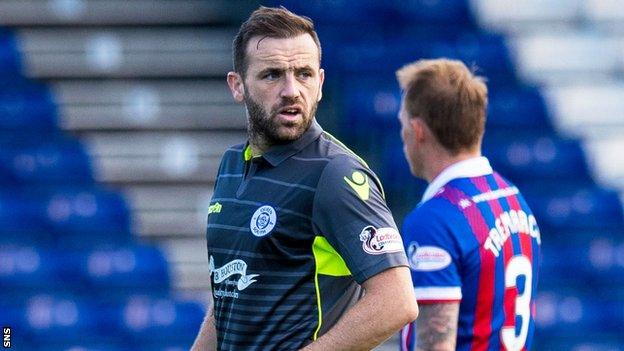
McFadden subsequently spent time with St Johnstone before returning to Motherwell again. His final senior playing spell came with Queen of the South, where he featured during the 2017–18 period. By this stage, he was approaching the end of a career that had included the Scottish Premiership, the English Premier League, international football, major injuries, and several returns to familiar clubs. His playing career was not defined solely by trophies or statistics. Instead, it was shaped by moments of individual brilliance, a willingness to keep competing after setbacks, and a distinctive style that made him memorable to supporters. His journey also provided a natural transition into coaching and media work, allowing him to remain involved in the sport after his playing days.
James McFadden as a Coach and Football Pundit
Following his playing career, McFadden moved into coaching and analysis. During his later period at Motherwell, he took on assistant coaching responsibilities, gaining experience in the tactical and organisational side of professional football. In March 2018, he joined Alex McLeish’s Scotland coaching staff as an assistant coach. The appointment gave him an opportunity to use his experience of international football to support the national team. Having played in difficult qualifiers himself, he understood the pressure faced by players representing Scotland and the importance of preparation, confidence, and teamwork.
His time on the Scotland coaching staff ended in 2019, when McLeish and his backroom team left their roles. McFadden subsequently became known to a wider audience through football punditry and television analysis. His experience across Scottish football and English club competitions gives him useful context when discussing team tactics, player performances, and international matches. As a pundit, he can draw on the perspective of someone who has played at a high level rather than relying exclusively on statistics or outside observation. His continuing involvement in football means that his career story extends beyond his final appearance on the pitch.
James McFadden’s Legacy
James McFadden’s legacy rests on his attacking talent, his contribution to Scotland, and the unforgettable moments he produced during his career. His time at Motherwell established him as an exciting young player, while his spells with Everton and Birmingham City exposed him to the demands of English football. He also experienced the difficult side of the professional game, particularly when injury interrupted his progress at Birmingham. Through those changes, he remained associated with a style of football built around creativity, confidence, and the ability to attempt something unexpected.
Above all, his goal against France in Paris in 2007 secured his place in Scottish football history. It was a moment that captured the excitement of international football and demonstrated how one player can create a memory that lasts for decades. McFadden’s 48 Scotland appearances and 15 goals underline his importance to the national team during a competitive period, even though Scotland did not qualify for Euro 2008. His later work in coaching and punditry has allowed him to stay connected to the game and share his knowledge with supporters.
Conclusion
James mcfadden remains one of the most memorable Scottish footballers of his generation, thanks to his attacking ability, powerful long-range shooting, and important contributions to the Scotland national team. From his early breakthrough at Motherwell to his spells with Everton and Birmingham City, he built a career defined by determination, creativity, and moments of individual brilliance. Although injuries affected parts of his playing journey, they did not erase the achievements that made him a respected ,in Scottish football.
His unforgettable goal against France in 2007 remains the highlight of his international career and a moment that Scottish supporters continue to celebrate. With 48 international appearances and 15 goals for Scotland, McFadden made a lasting contribution to his country’s football history. His later involvement in coaching and football punditry has allowed him to remain connected to the sport and share his experience with others.
