


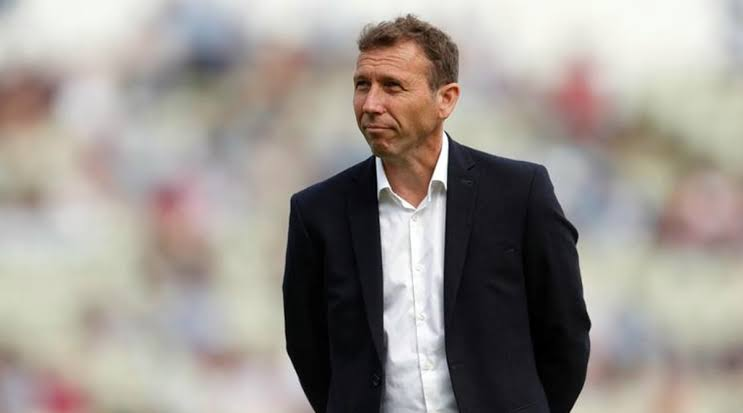
Michael Atherton is one of the most recognizable in English cricket. Known to many fans simply as “Athers,” he built his reputation as a determined opening batsman for England and Lancashire before becoming England Test captain. His international career lasted from 1989 to 2001, covering a period when Test cricket was dominated by some of the world’s most difficult fast bowlers and England often faced demanding challenges both at home and overseas.
Since retiring from professional cricket, michael atherton has developed an equally visible second career as a cricket journalist, writer, and television commentator. His calm style, detailed understanding of the game, and experience as a former international captain have made him a familiar voice during England matches.
Who Is Michael Atherton?
Michael Andrew Atherton was born on March 23, 1968, in Failsworth, Lancashire, England. michael atherton developed a strong interest in cricket at a young age and progressed through school and representative cricket before making his way into the professional game. His education at Manchester Grammar School was also an important part of his early development, and he later studied at Cambridge University while continuing to play high-level cricket.
Atherton was a right-handed opening batsman whose technique was built around concentration, patience, and the ability to withstand long periods of pressure. He was not primarily known as an aggressive stroke-maker. Instead, his value came from occupying the crease, wearing down bowlers, and producing long innings when England needed stability. That approach became a defining part of his identity as a Test cricketer and later influenced the way he discussed batting as a commentator.
Michael Atherton’s Early Cricket Career
Atherton’s progress through junior cricket was rapid. He represented England Under-19s as a teenager and eventually captained the side, demonstrating leadership qualities well before reaching the senior international team. His performances for school, university, and Lancashire established him as one of the promising young batsmen in English cricket during the late 1980s.
His connection with Lancashire became central to his playing career. Atherton played first-class cricket for the county and continued developing his technique against experienced professional bowlers. His performances eventually earned him an England Test call-up, and he made his Test debut against Australia at Trent Bridge in August 1989. He made his ODI debut against India the following year, beginning an international career that would span more than a decade.
Michael Atherton’s England Test Career
Atherton played 115 Test matches for England between 1989 and 2001, scoring 7,728 runs. His Test record included 16 centuries and 46 half-centuries, with a highest score of 185 not out. He also played 54 One Day Internationals, scoring 1,791 runs and making two centuries. These figures illustrate the length and consistency of his international career, particularly in Test cricket.
His reputation was built especially on difficult conditions. Atherton regularly faced some of the strongest fast bowlers of his generation, including Australia’s Glenn McGrath and South Africa’s Allan Donald. His willingness to remain at the crease for long periods made him particularly suited to demanding Test matches. Some of his most remembered performances came when England were under serious pressure and needed an opener capable of absorbing sustained attacks.
The Famous 185 Not Out Against South Africa
One of Michael Atherton’s most celebrated innings came against South Africa in Johannesburg in 1995. He scored an unbeaten 185 in the fourth innings while England attempted to survive a difficult situation. The innings became famous not simply because of the number of runs but because of the extraordinary amount of time he spent at the crease.
Atherton batted for more than ten hours, demonstrating the concentration and physical endurance that became trademarks of his Test career. South Africa’s attack included high-quality fast bowling, making the achievement particularly demanding. The innings helped England secure a draw and remains one of the performances most closely associated with Atherton.
Another memorable innings came later in his career when he scored 185 not out against South Africa at Johannesburg. His ability to remain focused through long periods of pressure made him one of England’s most recognizable opening batsmen of the 1990s. These marathon performances also explain why Atherton continues to appear in discussions about England’s most determined Test players.
Michael Atherton as England Captain
Atherton became England Test captain at the age of 25 after Graham Gooch stepped down. He eventually led England in 54 Test matches, a record for an England captain at the time. Taking responsibility for the national team at such a young age placed him in a difficult position because England were experiencing a challenging period in international cricket.
His captaincy was marked by both difficult results and memorable individual performances. England faced strong opponents during his leadership, including Australia, South Africa, the West Indies, Pakistan, India, and New Zealand. Atherton’s own batting responsibilities remained significant because he continued opening the innings while also carrying the responsibilities associated with captaincy.
He eventually resigned as England captain after the 1997–98 tour of the West Indies. He continued playing international cricket after giving up the captaincy, showing that the end of his leadership role was not the end of his Test career. He remained an important England batsman until his retirement during the 2001 Ashes series.
Michael Atherton and the Ball-Tampering Controversy
One of the most discussed episodes of Atherton’s playing career occurred during England’s Test against South Africa at Lord’s in 1994. Television cameras showed Atherton with a substance in his pocket while he was working on the cricket ball. The incident generated considerable controversy and became a lasting part of discussions about his career.
Atherton acknowledged that he had used dirt from his pocket to dry his hands before handling the ball, while match officials investigated the circumstances and he was fined. The episode attracted major media attention because Atherton was England’s captain and because infotmations surrounding ball condition were particularly sensitive in international cricket.
The incident did not define the entirety of his career. Atherton continued playing at international level for several years afterward and produced important innings for England. His career illustrates how a professional athlete can have both outstanding achievements and difficult moments that remain part of the historical record.
Michael Atherton’s Retirement From Cricket
Atherton’s final Test appearance came against Australia during the 2001 Ashes series. By this stage, a long-standing back problem had become increasingly difficult to manage. The physical demands of international cricket, particularly for an opening batsman who regularly spent hours at the crease, made the injury an important factor in the final stage of his career.
He retired with 115 Test appearances and 7,728 runs, along with a reputation for determination and resilience. His career batting average in Test cricket was around 37.7, and his highest Test score was 185 not out. While statistics provide one way to understand his career, Atherton’s reputation has also been shaped by the context in which he played and the difficult conditions he regularly faced.
Michael Atherton’s Career as a Journalist and Commentator
After retiring from cricket, Atherton successfully moved into journalism and broadcasting. He became a cricket writer and eventually took on a prominent role with The Times, where he has written extensively about international and domestic cricket. His experience as a former England captain gives his analysis a perspective that combines personal knowledge of professional cricket with journalistic observation.
Atherton also became a familiar television commentator through his work with Sky Sports. His commentary style is generally analytical and measured, with attention given to technique, tactics, match conditions, and the personalities involved. Because he played against many of the leading cricketers of the 1990s and early 2000s, his commentary often includes historical context that helps viewers understand how modern cricket has developed.
Michael Atherton’s Writing and Books
Writing has become another significant part of Atherton’s post-playing career. His work has included books that examine his experiences in professional cricket and reflect on the successes, failures, controversies, and personalities he encountered during his playing days. His writing tends to combine personal memories with broader observations about English cricket.
One of the recurring themes in Atherton’s writing is the contrast between professional cricket as experienced by players and the way the sport appears to spectators. Having been both an international player and a journalist, he has been able to discuss subjects such as pressure, leadership, selection, preparation, media attention, and the changing culture of the game from two different perspectives.
Michael Atherton’s Life Today
Michael Atherton remains closely involved with cricket through journalism and broadcasting. Rather than leaving the sport completely after retirement, he moved into a role that allowed him to continue discussing the game at the highest level. He regularly contributes analysis around England’s international matches and major cricket events.
At 58 years old, Atherton has spent more than three decades connected to professional cricket, first as a player and later as a journalist and broadcaster. His career is unusual because he has experienced international cricket from inside the dressing room and then spent many years explaining it to audiences from outside the boundary. That combination has become a defining feature of his public identity.
Michael Atherton’s Family and Personal Life
Atherton has generally kept much of his private life away from the intense attention that surrounded his playing career. He is married and has children, including his son Josh de Caires, who has followed the family connection to cricket and has played professional cricket. Josh’s career has naturally attracted attention because of his father’s long association with England.
Despite his public profile, Atherton has generally focused his media presence on cricket rather than turning his family life into a major part of his professional identity. His work remains centered on commentary, journalism, writing, and analysis. This has helped maintain a clear separation between his public cricket career and his personal life.
Michael Atherton’s Legacy in English Cricket
Michael Atherton’s legacy is closely connected to endurance, opening batting, leadership, and his ability to operate under pressure. He played during a demanding era of international Test cricket and regularly faced some of the finest fast bowlers of his generation. His long innings, particularly against high-quality attacks, remain an important part of his cricket story.
His legacy has also continued through his work as a journalist and broadcaster. Few former England players have remained as closely connected to the national game for so long after retirement. Atherton moved from the dressing room to the commentary box without losing his connection to the sport, creating a second career that has become almost as recognizable as his first.
Conclusion
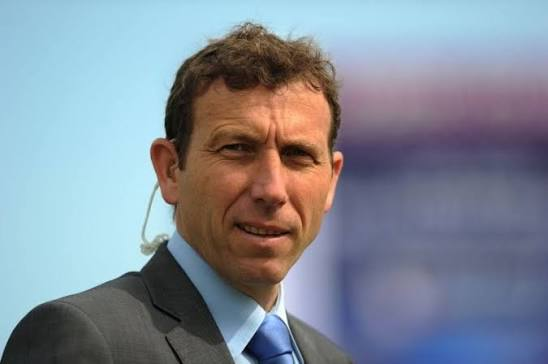
Michael Atherton career represents much more than the statistics attached to his 115 Test matches. He was a determined England opening batsman, a young national captain, a Lancashire stalwart, and one of the most recognizable English cricketers of the 1990s. His 7,728 Test runs, 16 centuries, 46 fifties, and famous marathon innings demonstrate the importance of concentration and resilience in Test cricket.
After retiring in 2001, Atherton successfully reinvented himself as a journalist, writer, and television commentator. His work with The Times and Sky Sports has kept him at the center of English cricket coverage, allowing him to analyze a sport he once played at the highest level. From his early days in Lancashire to his England captaincy and later broadcasting career, Michael Atherton remains an influential figure in the story of modern English cricket.
