



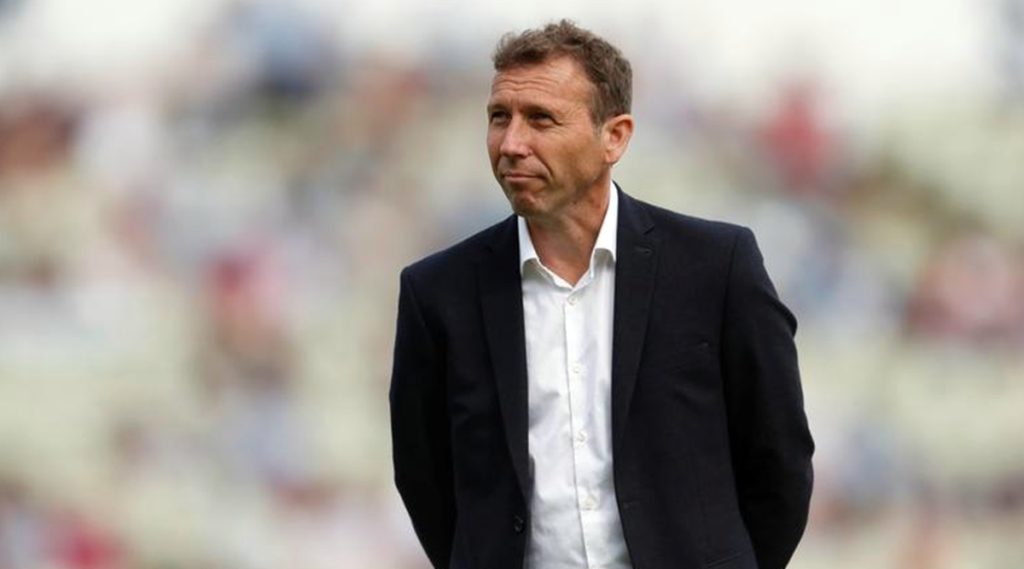
Michael Atherton is one of the most respected and recognisable figures in English cricket. Best known as a former England opening batsman and captain, he later built a successful career as a cricket journalist, author, and television commentator. His playing career was defined by determination, patience, and a strong defensive technique, while his work in the media has made him a familiar voice for modern cricket audiences.
Born on 23 March 1968 in Failsworth, Manchester, Michael Atherton developed his cricketing skills from a young age. He represented England at international level, playing 115 Test matches and 54 One Day Internationals. He scored 7,728 Test runs, including 16 centuries, and captained England in 54 Tests. His career included major Ashes contests, difficult overseas tours, memorable innings, and the intense pressures that came with leading England during a challenging period for the national side.
Early Life and Cricket Development
Michael Atherton grew up in the Manchester area and attended Manchester Grammar School, where his cricketing ability became increasingly obvious. michael atherton represented school and junior teams before progressing into higher-level cricket. His early development was not limited to batting, as michael atherton also bowled leg-spin and showed considerable all-round cricketing ability during his younger years.
Atherton went on to study at Downing College, Cambridge, while continuing to develop as a first-class cricketer. He played for Cambridge University and Lancashire, establishing himself as a serious opening batsman. His performances at a young age attracted considerable attention, and michael atherton became one of the most promising young cricketers in England. His rapid progression eventually led to his international debut and the beginning of a long England career.
Michael Atherton’s England Test Career
Atherton made his Test debut for England against Australia at Trent Bridge in August 1989. michael atherton initially struggled on debut, but he soon showed that he belonged at international level. His first Test century came against New Zealand, and he developed into one of England’s most dependable opening batsmen during the 1990s.
Across 115 Test matches, Atherton scored 7,728 runs at an average of 37.69, with 16 centuries and 46 fifties. His highest Test score was an unbeaten 185. His 54 One Day International appearances produced 1,791 runs, including two centuries. These numbers reflect a player whose greatest strength was not explosive scoring but the ability to occupy the crease, absorb pressure, and give his team valuable time and stability at the top of the order.
Michael Atherton as England Captain
michael atherton became England captain during the 1993 Ashes series after Graham Gooch stepped down. At only 25 years old, he took responsibility for leading an England team that was experiencing an uncertain period. He eventually captained England in 54 Test matches, a record that reflected both his longevity and the trust placed in him by selectors.
His captaincy was often closely linked to his personality as a cricketer. Atherton was serious, competitive, analytical, and highly determined. He was prepared to fight for every run as a batsman and every advantage as captain. England experienced both victories and disappointments during his leadership, including challenging tours of Australia, the West Indies, South Africa, India, Pakistan, and other cricketing nations. His captaincy remains an important part of the story of English cricket in the 1990s.
The Famous 185 Not Out Against South Africa
One of the defining moments of Atherton’s playing career came against South Africa in Johannesburg in 1995. England were in a difficult position, and Atherton produced one of the most celebrated examples of defensive Test batting in English cricket. He remained at the crease for more than ten hours and finished unbeaten on 185.
The innings was remarkable because of the pressure involved and the quality of the South African attack. Atherton faced fast bowling from players such as Allan Donald and had to concentrate for an extraordinary length of time. Rather than attempting to dominate the bowlers with attacking stroke play, he relied on patience, judgement, concentration, and defensive technique. His performance helped England save the Test and became a lasting symbol of his approach to batting.
The Ball-Tampering Controversy
Atherton’s career also contained one of the most widely discussed controversies of 1990s English cricket. During the 1994 Test against South Africa at Lord’s, television footage showed Atherton taking material from his pocket and appearing to use it on the cricket ball. The incident attracted major attention because he was England captain and because ball condition was an important part of Test cricket strategy.
Atherton explained that the substance was dirt used to dry his hands and denied deliberately changing the condition of the ball. He was subsequently fined by England management. The controversy remained a difficult part of his public career and demonstrated the level of scrutiny placed on international captains. It also became an important part of the story surrounding Atherton’s relationship with the media, particularly because he later moved into journalism and became one of the journalists analysing other players and sporting controversies.
Retirement and the End of His Playing Career
Atherton continued playing international cricket despite recurring problems with his back. The physical demands of opening the batting at Test level, combined with his existing back condition, made his later years increasingly difficult. Nevertheless, he remained an important part of England’s batting lineup.
His final Test appearance came against Australia at The Oval. By the time he retired, he had established himself as one of England’s leading Test run-scorers of his generation. His career statistics, long innings, captaincy record, and battles against leading fast bowlers ensured that he left international cricket with a substantial reputation.
Michael Atherton as a Journalist
Retirement from cricket did not end Atherton’s connection with the sport. Instead, it opened a second career in journalism. He worked for the Sunday Telegraph before becoming cricket correspondent of The Times. His writing has covered international cricket, the Ashes, England’s performances, players, coaches, administrators, and major developments affecting the sport.
Atherton’s success as a journalist is significant because he did not simply rely on his former reputation as an England captain. His writing developed its own identity, combining first-hand cricket experience with careful observation and analysis. He has also been recognised for his journalism, including winning Sports Journalist of the Year at the British Press Awards and Sports Writer of the Year from the Sports Journalists’ Association. His work often examines the human and strategic sides of cricket rather than focusing only on statistics.
Michael Atherton as a Sky Sports Commentator
Atherton has also become one of the leading voices in cricket broadcasting. He joined Sky Sports’ cricket commentary team and has covered Test matches and other international cricket around the world. His calm style, detailed knowledge, and dry sense of humour have made him particularly popular with viewers.
His experience as an international opening batsman gives his commentary an additional level of authority. He understands the technical and psychological challenges of facing high-quality bowling, dealing with pressure, preparing for long Test matches, and making tactical decisions. When discussing batting technique, bowling plans, field placements, or captaincy, he can draw upon personal experience while still approaching the game from the perspective of a journalist and analyst.
Books and Writing Career
Atherton has extended his work beyond newspapers and television through several books. His autobiography, Opening Up, was published after his playing career and provides an account of his experiences as a professional cricketer and England captain. It gives readers an opportunity to understand the pressures and experiences that shaped his career.
He has also written Gambling: A Story of Triumph and Disaster, exploring gambling through personal experiences and wider stories. His books demonstrate the broader range of his interests as a writer. Although cricket remains central to his professional identity, his writing has also examined issues involving character, pressure, ambition, success, failure, and the consequences of difficult decisions.
Michael Atherton’s Legacy in English Cricket
Michael Atherton’s legacy has two important sides. As a cricketer, he is remembered as a determined England opener who played 115 Tests, scored thousands of runs, and captained his country through a challenging era. His unbeaten 185 against South Africa remains one of the clearest examples of his extraordinary patience and resilience.
As a journalist and commentator, Atherton has remained an influential part of English cricket long after his retirement from playing. His ability to explain technical details in simple language, combined with his knowledge of international cricket and experience of England’s dressing room, has helped him become a trusted voice for cricket audiences. His career shows how an elite sportsman can successfully transfer experience from the field into journalism and broadcasting.
Conclusion
Michael Atherton has enjoyed an unusually long and varied career in cricket. He progressed from a talented young Manchester cricketer to England Test batsman and captain before establishing himself as a respected journalist and commentator. His 7,728 Test runs, 16 centuries, 54 Tests as captain, and famous 185 not out against South Africa remain important milestones in his playing career.
What makes Atherton particularly distinctive is the way his different careers connect. The patience, concentration, discipline, and observation that helped him survive difficult spells as an international opener have also contributed to his success as a writer and broadcaster. From Lancashire and England to The Times and the Sky Sports commentary box, Michael Atherton has remained closely connected with cricket and continues to be recognised as one of the game’s most distinctive English voices.
