


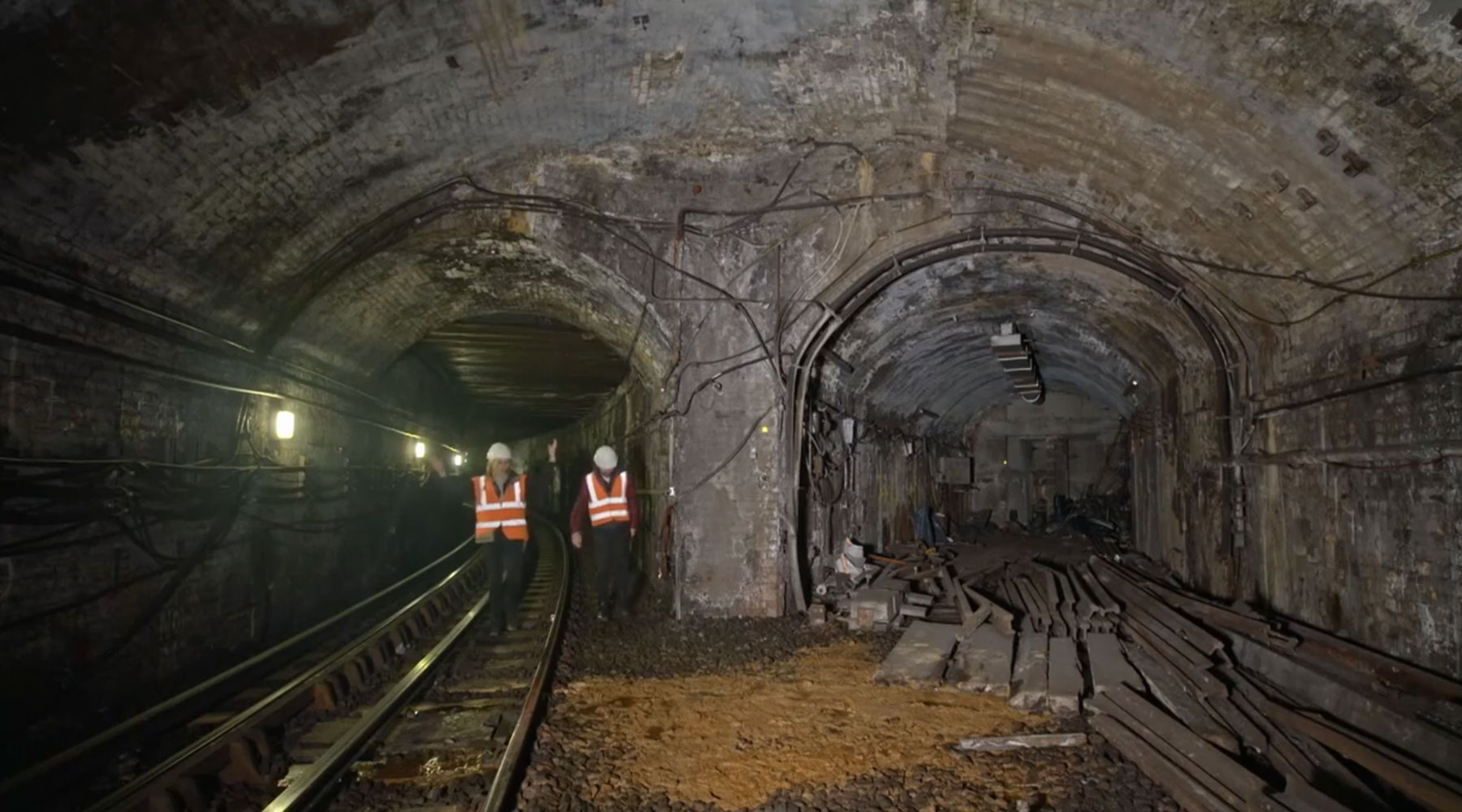
The Secrets of the London Underground series has turned the hidden side of the Tube into fascinating television. Presented by railway historian Tim Dunn and Siddy Holloway of the London Transport Museum, the documentary explores abandoned stations, forgotten tunnels, wartime shelters, secret bunkers, unusual engineering features and historic objects connected with London’s underground railway. First broadcast in 2021, the series has four seasons and has introduced viewers to places that most passengers will never see during an ordinary Tube journey.
secrets of the london underground London’s Underground is much larger than the network shown on today’s maps. Beneath busy streets are closed platforms, disused passageways, old station buildings and sections of railway that have been altered or abandoned as London developed. Some locations were closed because they were no longer useful, while others were affected by new lines, changing passenger numbers, wartime requirements or major redevelopment.
What Is Secrets of the London Underground?
Secrets of the London Underground is a British factual documentary series focused on the lesser-known parts of the London Underground network. The programme combines railway history with exploration, allowing viewers to see locations that are normally closed to the public. Tim Dunn brings a railway historian’s knowledge to the programme, while Siddy Holloway provides expertise connected with the London Transport Museum and its Hidden London programme. Their presentation style makes complicated railway history easier to understand while keeping the focus on the places themselves.
The programme secrets of the london underground originally aired on Yesterday, now associated with the U and Yesterday television brand, and was produced by Brown Bob Productions for UKTV. Each episode generally combines exploration of hidden Tube locations with material from the London Transport Museum’s collections and archives. Instead of simply showing abandoned platforms, the programme secrets of the london underground explains why they were built, why they became unnecessary and how some were later used for completely different purposes. This historical background is a major part of what makes the series secrets of the london underground more than a conventional travel documentary.
Tim Dunn and Siddy Holloway Explore Hidden London
Tim Dunn is a railway historian, writer and presenter whose work frequently focuses on Britain’s railway heritage. His enthusiasm for railway engineering, station architecture and transport history is central to Secrets of the London Underground. He approaches the Underground not simply as a commuter system but as a living historical record. Old station layouts, signs, tunnels and engineering features can reveal how London’s transport needs changed over generations.
Siddy Holloway is closely associated with the London Transport Museum’s Hidden London programme, which gives visitors access to selected disused and previously inaccessible Underground locations. Her knowledge adds important historical context to the programme, particularly when the presenters investigate spaces connected with wartime London or unusual railway projects. Together, Dunn and Holloway provide a balance between railway enthusiasm and museum-based historical interpretation, helping viewers understand why apparently ordinary tunnels can contain important stories about London’s past.
Abandoned Tube Stations Beneath London
One of the biggest attractions of the series secrets of the london underground is its exploration of abandoned Tube stations. London has had numerous stations that were closed, relocated, rebuilt or left incomplete as the network developed. Some disappeared almost completely, while others remain surprisingly well preserved. Aldwych is one of the best-known examples. Opened in 1907 as a branch terminus from Holborn, it closed permanently in 1994 after decades of relatively limited passenger use.
Other former stations have equally interesting stories. British Museum closed after Holborn station became a more useful interchange, while Brompton Road closed after nearby Knightsbridge was improved. South Kentish Town stopped operating in 1924 and never reopened. York Road closed in 1932 after relatively low passenger numbers. These examples demonstrate that a Tube station is not necessarily permanent simply because it appears on a historic map. Changes in population, technology, interchange arrangements and railway infrastructure can make an existing station redundant.
Aldwych and the Famous Hidden Branch Line
Aldwych is particularly important to the story of London’s hidden Underground because much of the former station remains recognizable. The station opened as part of a short Piccadilly line branch and operated for most of its life with limited passenger demand. Its relative isolation from the rest of the modern network eventually contributed to its closure. Today, the surviving station provides an unusually clear picture of an earlier period of London Underground history.
Aldwych also has a remarkable wartime history. During the Second World War, the station and its tunnels were used for shelter and for safeguarding valuable cultural objects. Items from major national collections were moved underground to protect them from bombing. After the station closed, its distinctive platforms and tunnels found another life as filming locations. Its atmosphere and relatively preserved appearance have made it useful for films and television productions that need an authentic Underground setting, which is another reason the station remains famous.
Secret Bunkers and Wartime Underground London
The London Underground played important roles during periods of national crisis, especially during the Second World War. Some stations became air raid shelters, while other underground spaces were adapted for government, military or industrial purposes. The depth and strong construction of certain Tube locations made them useful when London was exposed to bombing. The Underground therefore became more than a transport system during the war; it was also part of the city’s wider emergency infrastructure.
Secrets of the London Underground explores several locations connected with this hidden wartime history. Down Street, for example, was closed as a passenger station in 1932 but later became a secure underground facility during the Second World War. Other locations were used as shelters where Londoners could spend nights during the Blitz. These stories show how quickly existing transport infrastructure could be adapted when the city faced extraordinary circumstances, turning forgotten railway spaces into places of national importance.
The North End Mystery and Unfinished Stations
Not every hidden Underground location was a successful station that later closed. Some were planned, constructed partly and then abandoned before they could properly serve passengers. North End beneath Hampstead Heath is a particularly interesting example. The station was constructed as part of plans for the Northern line extension but was never completed for normal passenger service. Its unfinished spaces later became associated with Cold War preparations.
The story of North End demonstrates how London Underground history is shaped by changing plans. Building a railway involves enormous costs, engineering challenges and long-term assumptions about where people will live and travel. When those assumptions change, an almost-complete station can suddenly lose its purpose. The unfinished platforms and passageways left behind become historical evidence of plans that London never fully realized. This is exactly the kind of overlooked detail that the documentary series brings to a wider audience.
Hidden Engineering Across the Tube Network
The secrets of the london underground is famous for its trains and stations, but some of its most interesting secrets are engineering features hidden behind ordinary walls. Ventilation systems, emergency passages, flood protection, old signalling equipment, abandoned escalator arrangements and tunnelling structures all reveal how complicated the network really is. Some features were designed more than a century ago, when engineers were developing new methods for building railways underneath a rapidly expanding city.
One memorable subject explored by the programme is the unusual spiral escalator at Holloway Road. The Tube network also contains remnants of different generations of signalling, station design and tunnel construction. At Moorgate, for example, the history of tunnelling includes connections with James Henry Greathead’s pioneering work. These details show that London Underground history is not only about ghost stations. It is also about engineering experimentation and the solutions developed to move millions of people beneath a crowded city.
The London Underground During the Second World War
The Second World War transformed many Underground stations and tunnels. Deep-level shelters gave London residents somewhere to seek protection during air raids, and stations such as Clapham South became associated with large numbers of people sleeping underground. Some disused or adapted spaces were also used for other wartime purposes, demonstrating how the network became an important part of London’s defensive and civil infrastructure.
The wartime stories explored in Secrets of the London Underground also help explain the physical appearance of some surviving locations. Marks, fittings, rooms and altered passageways can sometimes reveal how a station was used during the conflict. The history is particularly powerful because these spaces were not designed as museums. They were working parts of a city under pressure, and their survival provides a direct connection with the people who lived through one of the most difficult periods in London’s modern history.
London Transport Museum and the Hidden London Archives
The London Transport Museum plays an important role in understanding the secrets of the Underground. Its collections include vehicles, photographs, signs, engineering drawings, uniforms, artwork and countless other objects documenting the development of London’s transport system. The museum’s depot in Acton contains a large proportion of the collection that cannot be displayed in the main Covent Garden museum, making it an important resource for researchers and transport enthusiasts.
The museum’s Hidden London programme has also helped turn underground history into an experience that visitors can explore safely. Guided tours have offered access to selected disused stations and locations, including Aldwych, Down Street and sections of Charing Cross. These tours demonstrate an important point about the documentary series: hidden Underground locations are not simply abandoned places to enter casually. Many are restricted, structurally complex or operationally sensitive, so access needs to be controlled and properly managed.
Secrets of the London Underground Series and Episodes
The first season of Secrets of the London Underground introduced viewers to locations including Holborn, North End, Piccadilly, Euston, St Mary’s and Clapham. Later seasons expanded the programme’s coverage of abandoned stations, hidden infrastructure, historical collections and unusual areas across the network. The episode structure gives each location enough time to explain both its physical features and the historical reason those features exist.
By its fourth season, the series secrets of the london underground had established a recognizable format built around railway exploration and historical storytelling. The programme secrets of the london underground has covered everything from forgotten platforms and secret passageways to old railway technology and wartime shelters. It is this combination that appeals to viewers searching for London Underground secrets, ghost stations, abandoned Tube stations and hidden London history. Rather than treating every location as a mystery without an explanation, the programme usually connects the unusual features with documented changes in London’s transport history.
Why Secrets of the London Underground Remains Fascinating
The enduring appeal of Secrets of the London Underground comes from the contrast between the London people see above ground and the hidden world beneath it. Millions of journeys take place on the Tube, yet passengers usually see only a fraction of the infrastructure surrounding them. A locked door, blocked passage or unused platform can represent decades of history that remain invisible during an ordinary journey. The programme makes those hidden layers easier to appreciate.
The series also demonstrates that London’s Underground is constantly changing. Stations can become obsolete, tunnels can be adapted, and spaces built for one purpose can later serve another. Some abandoned locations have become filming sites, museums, storage areas, emergency training spaces or protected historical sites. For viewers interested in Secrets of the London Underground, the most interesting lesson may be that the Tube is not just a railway beneath London. It is an enormous historical archive, built into the city itself, with stories from Victorian engineering, wartime survival, modern transport planning and everyday London life.
Conclusion: The Secrets Beneath London’s Streets
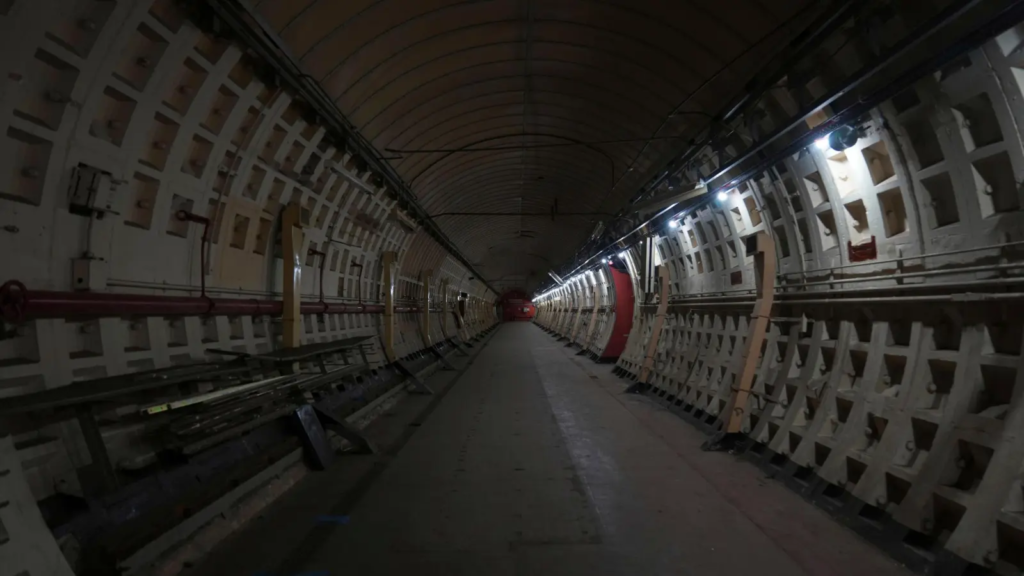
Secrets of the London Underground offers a detailed look at a side of London that most people never experience. Through Tim Dunn and Siddy Holloway, the programme explores abandoned Tube stations, unfinished projects, wartime shelters, secret bunkers, unusual engineering features and historical collections. Locations such as Aldwych, North End, Down Street and Clapham South show how the Underground has repeatedly been adapted as London’s needs have changed.
The real fascination of the series is that its secrets are based on the physical history of the city rather than simple mystery. Every closed station or forgotten tunnel has a reason behind it, whether that reason involves falling passenger numbers, new railway routes, engineering limitations, war or redevelopment. For anyone interested in London history, railway heritage, abandoned places or the hidden Tube network, Secrets of the London Underground provides an engaging way to understand how much of London’s story still exists beneath its streets.
