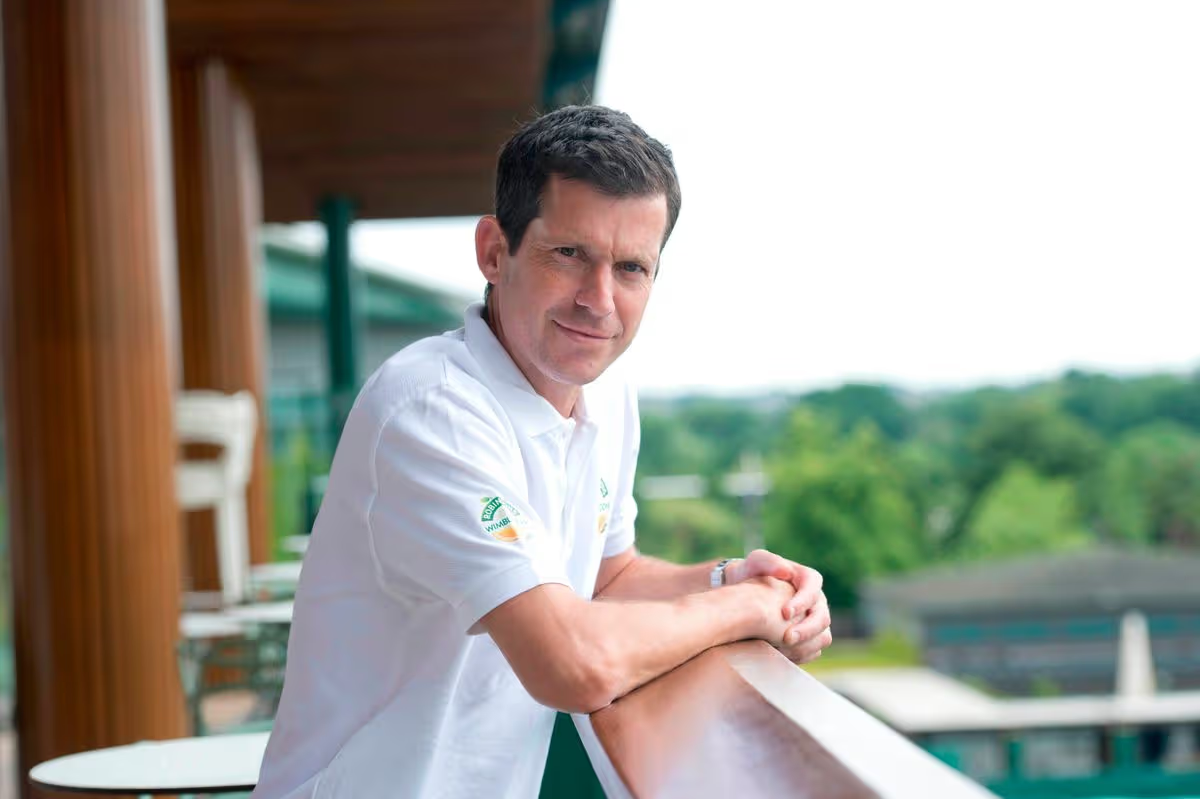
Tim Henman: Biography, Tennis Career, Wife, Family, Net Worth, and Wimbledon Legacy
Tim Henman is one of the most recognizable figures in British tennis history. Known for his elegant playing style, determination, and memorable performances at Wimbledon, he became a national sporting favorite during the 1990s and early 2000s. His ability to compete against the world’s leading players helped restore public excitement around British men’s tennis at a time when Grand Slam success remained difficult to achieve.
Throughout his professional career, tim henman earned 11 ATP singles titles, reached a career-high world ranking of number four, and competed in six Grand Slam singles semifinals. Although he never won a major singles championship, his achievements established him among the most successful British male tennis players of his generation. After retiring in 2007, he remained involved in tennis through television commentary, Wimbledon responsibilities, and charitable activities. His journey continues to interest fans who want to learn about his career, family, achievements, and lasting influence on British tennis.
Who Is Tim Henman?
Timothy Henry Henman, commonly known as Tim Henman, is a retired British professional tennis player who became famous for his performances at Wimbledon. He was born on September 6, 1974, in Oxford, England. During his playing career, Henman developed a reputation for intelligent tactics, excellent net play, and a disciplined approach to competition. His achievements made him Britain’s leading male tennis player for much of his professional career.
Henman turned professional in 1993 and competed against some of the greatest players of his era, including Pete Sampras, Andre Agassi, Roger Federer, and Lleyton Hewitt. His career was particularly notable because he achieved success while tennis was changing from traditional serve-and-volley tactics toward increasingly powerful baseline play. Despite these developments, Henman remained competitive through precise shot selection, quick movement, and strong technical skills.
His popularity extended beyond individual results. British tennis supporters followed his Wimbledon performances with extraordinary enthusiasm, creating an atmosphere that became an important part of the tournament’s identity. His success also encouraged younger British players to pursue professional tennis. Although his competitive career ended in 2007, Henman continues to be associated with Wimbledon and the development of British tennis.
Tim Henman Early Life, Parents, and Education
Tim Henman was born into a family with a strong interest in tennis. His father, Anthony Henman, worked as a solicitor, while his mother, Jane Henman, was an experienced tennis player. His family background provided opportunities to develop his sporting abilities from an early age. Tennis was a familiar part of his childhood, and he began learning the game while still very young.
Henman grew up in Oxfordshire and attended Dragon School in Oxford before continuing his education at Reed’s School in Surrey. Reed’s had an established tennis program that supported talented young players. His education allowed him to combine academic studies with regular training and competitive matches. During these years, he developed the technical foundations that later became essential to his professional playing style.
His family played an important role in supporting his ambitions. Henman’s maternal grandfather and great-grandmother had connections with Wimbledon, reflecting the family’s longstanding relationship with tennis. As his abilities improved, he began participating in junior competitions and receiving specialized coaching. These experiences helped prepare him for the physical and psychological demands of professional tennis, where consistency and determination are essential.
Tim Henman Professional Tennis Career and Major Achievements
Tim Henman began his professional tennis career in 1993 and gradually established himself on the ATP Tour. His early years involved competing in international tournaments, improving his ranking, and learning to handle the pressure of professional competition. His breakthrough came as he developed greater consistency and confidence against highly ranked opponents. By the late 1990s, he had become one of Britain’s most successful tennis players.
Throughout his career, Henman won 11 ATP singles titles and reached numerous tournament finals. One of his most important victories came at the 2003 Paris Masters, where he captured an ATP Masters Series title. This achievement demonstrated that his abilities extended beyond grass courts and that he could compete successfully against leading players on different surfaces. His performances helped him reach a career-high singles ranking of world number four in July 2002.
Henman’s Grand Slam record included six singles semifinal appearances. He reached the Wimbledon semifinals four times and also advanced to the semifinals of the French Open and US Open in 2004. These achievements reflected his ability to adapt his game to different playing conditions. Although he never reached a Grand Slam singles final, his consistent performances against elite competition established him as an important figure in British tennis history.
Tim Henman Wimbledon Career and Henman Hill
Wimbledon played a central role in Tim Henman’s professional career and public reputation. His performances at the All England Club attracted enormous attention from British tennis supporters, who hoped he could become the first British man since Fred Perry in 1936 to win the Wimbledon singles championship. Henman’s attacking playing style was particularly effective on grass courts, where his accurate volleys and quick movement helped him control points.
He reached the Wimbledon singles semifinals in 1998, 1999, 2001, and 2002. These appearances created memorable moments for British tennis fans, particularly during closely contested matches against leading international players. His 2001 semifinal against Goran Ivanišević became one of the most dramatic matches of his career. Rain interruptions affected the contest, and Ivanišević eventually won in five sets before claiming the championship.
Henman’s popularity also gave rise to the famous identity “Henman Hill,” referring to the grassy area at Wimbledon where spectators gather to watch matches on a large screen. Although officially known as Aorangi Terrace, the area became closely associated with Henman during his Wimbledon campaigns. An identity remains widely recognized, even after his retirement. His influence helped create a distinctive atmosphere that continues to form part of the Wimbledon experience.
Tim Henman Playing Style, Strengths, and Tennis Technique
Tim Henman was best known for his serve-and-volley playing style, which involved approaching the net immediately after serving and attempting to finish points with precise volleys. This approach required excellent coordination, quick reactions, and an ability to anticipate an opponent’s shots. Henman developed these skills through years of training and became one of the leading serve-and-volley players of his generation.
His game relied on accurate serving, controlled movement, and intelligent shot placement rather than overwhelming power. Henman was particularly effective at using his one-handed backhand to create opportunities and move forward into attacking positions. His ability to read opponents and adjust tactics during matches made him a difficult competitor. These strengths were especially valuable on grass courts, where fast exchanges rewarded quick decisions and confident net play.
Although his style was traditionally associated with grass-court tennis, Henman also achieved significant results on hard courts and clay. His semifinal appearance at the 2004 French Open demonstrated his adaptability on a surface generally associated with longer baseline rallies. His technical abilities and tactical awareness allowed him to remain competitive as professional tennis became increasingly physical. His playing style remains an important part of his reputation among tennis enthusiasts.
Tim Henman Wife, Children, and Family Life
Tim Henman is married to Lucy Heald, a former television producer. The couple married in December 1999 and have maintained a relatively private family life despite Henman’s public sporting career. Lucy supported him during his professional tennis years, when international travel and tournament schedules required considerable time away from home. Their long marriage has attracted interest from fans who follow Henman’s life beyond tennis.
Tim and Lucy Henman have three daughters Rose, Olivia, and Grace. Their children grew up during a period when Henman was transitioning from professional competition into retirement and broadcasting. He has spoken about the importance of spending time with his family and maintaining a balanced lifestyle. After years of traveling internationally for tournaments, retirement allowed him greater opportunities to participate in everyday family activities.
The Henman family has generally avoided unnecessary media attention, preferring to maintain privacy around personal matters. Although Tim remains a familiar figure during Wimbledon coverage, he does not regularly share detailed information about his children’s private lives. His approach reflects a desire to separate professional responsibilities from family relationships. This balance has become an important part of his life after competitive tennis.
Tim Henman Retirement and Life After Professional Tennis
Tim Henman announced his retirement from professional tennis in 2007, bringing an end to a career that had lasted approximately fourteen years. His final professional appearances included representing Great Britain in Davis Cup competition. His retirement marked the conclusion of an important period in British men’s tennis, during which he had consistently carried national expectations at Wimbledon and other major tournaments.
Following retirement, Henman remained closely involved in tennis through broadcasting and commentary. He became a familiar analyst during Wimbledon coverage, offering insights into player tactics, match preparation, and the psychological challenges of professional competition. His experience competing against some of the world’s greatest players gives him a valuable perspective when discussing modern tennis. His calm communication style has helped him establish a respected role in sports broadcasting.
Henman has also maintained connections with the All England Lawn Tennis Club and British tennis development. He has participated in charitable activities, tennis events, and initiatives supporting young players. His involvement demonstrates a continuing commitment to the sport that shaped his professional life. Rather than leaving tennis completely after retirement, he has used his experience to contribute to its wider development.
Tim Henman Net Worth, Earnings, and Business Activities
Tim Henman earned substantial prize money during his professional tennis career. His official career singles and doubles prize money exceeded $11 million, reflecting his consistent participation in major tournaments and success on the ATP Tour. His earnings included prize money from Grand Slam events, ATP championships, and other international competitions. These achievements made him one of the financially successful British tennis players of his generation.
In addition to tournament earnings, Henman benefited from sponsorship agreements and commercial partnerships during his playing career. His popularity in Britain made him an attractive figure for companies seeking associations with professional tennis. After retirement, his broadcasting work, public appearances, and business interests provided further professional opportunities. However, his exact current net worth is not publicly verified, and online estimates should not be treated as confirmed financial information.
Henman’s financial achievements are only one aspect of his professional success. His reputation has been built primarily through sporting performance, consistency, and contributions to British tennis. He has maintained a respected public profile without relying on constant media attention. His experience demonstrates how professional athletes can develop careers beyond competition by using their knowledge, reputation, and communication skills.
Tim Henman Legacy and Influence on British Tennis
Tim Henman’s influence on British tennis extends beyond his tournament victories and world ranking. During the 1990s and early 2000s, he became a central figure in British sporting culture because of his performances at Wimbledon. His achievements helped maintain public enthusiasm for tennis and encouraged greater interest in the sport among younger generations. His popularity demonstrated the importance of having successful national players competing at major international tournaments.
His Wimbledon campaigns created memorable experiences for spectators, particularly those gathering on Henman Hill to watch matches together. The excitement surrounding his performances became an established part of the tournament’s atmosphere. Although he never won the Wimbledon singles title, his repeated semifinal appearances represented significant achievements during an era dominated by exceptional international players. His career helped establish expectations for future British tennis success.
Henman’s legacy also includes his contribution to the development of professional tennis in Britain. Players such as Andy Murray later achieved major Grand Slam victories, including Wimbledon championships in 2013 and 2016. While each player’s journey was different, Henman’s success helped maintain the visibility of British men’s tennis during the years preceding Murray’s breakthrough. His continued involvement in broadcasting and tennis activities allows him to remain connected with new generations of players and supporters.

Conclusion
Tim Henman remains one of the most important figures in modern British tennis history. His professional career was defined by determination, technical ability, and memorable performances against the world’s leading players. With 11 ATP singles titles, a career-high world ranking of number four, and six Grand Slam semifinal appearances, he established an impressive record despite never winning a major singles championship.
His Wimbledon achievements created a lasting connection with British tennis supporters, particularly through the famous Henman Hill tradition. Beyond competition, his marriage to Lucy Heald, family life, broadcasting career, and involvement in tennis development demonstrate the different aspects of his life after retirement. His continued presence at major tennis events reflects his enduring relationship with the sport.
Ultimately, Tim Henman’s legacy is about more than trophies and rankings. He helped inspire enthusiasm for tennis in Britain, demonstrated the value of professionalism, and remained competitive during an exceptionally demanding era.